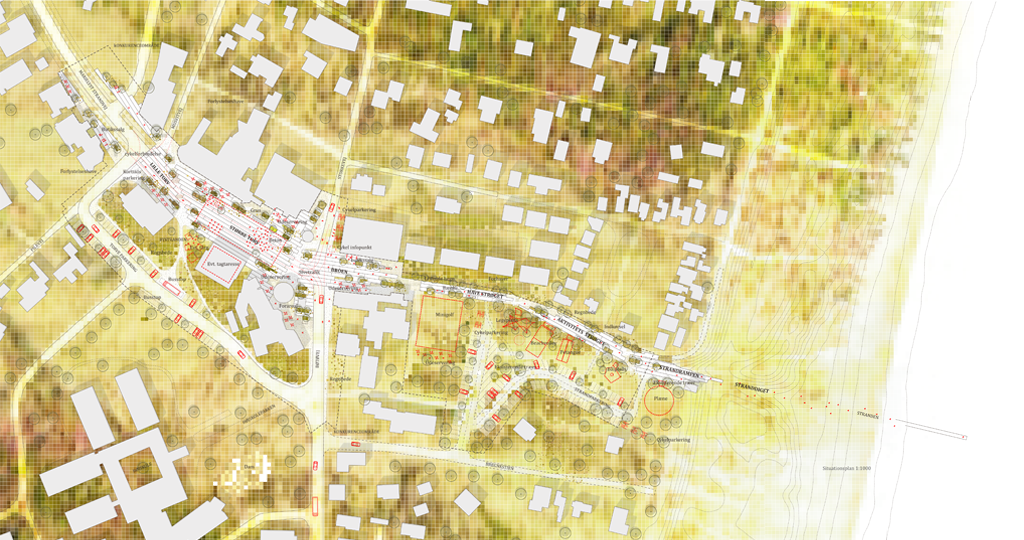
Marielyst is a small town in the south of Denmark well known for being one of the most popular holiday locations on the Baltic Sea. Since the beginning of XX century its 20 km of white sand beaches attracted an increasing number of seasonal tourists, up to host nowadays 6000 summer houses in its area. The spatial configuration of Marielyst appears chaotic and it’s lacking of a recognisable identity; the main element of the urban structure is the principal street, a traffic vein that allows people to reach the heart of the small town, and from which secondary narrow streets start connecting every single wooden house. The subject of Marielyst competition was finding and providing a spatial organization to this place in order to structure an urban articulation among its parts. Moreover, an important feature to be considered in this site’s revitalization was the “beachy” atmosphere of Marielyst, its main character.
As usual, we worked with a multidisciplinary and international team, with the Danish landscape Office Kristine Jensen, after being chosen among 4 other finalists.
Plan
Our proposition started from the identification of the land’s shape, which changed its configuration many times until the present. In the past, the island of Falster -where Marielyst is located- was composed by three smaller islands and was crossed by water; the area had been also flooded and remained swampy for many years, until the late 1800, when it was drained. Inspired by this ancient situation, we conceived the idea of “Delta“, a sinuous and porous path that connects the dynamic activities of urban space with the relaxed atmosphere of a beach context.
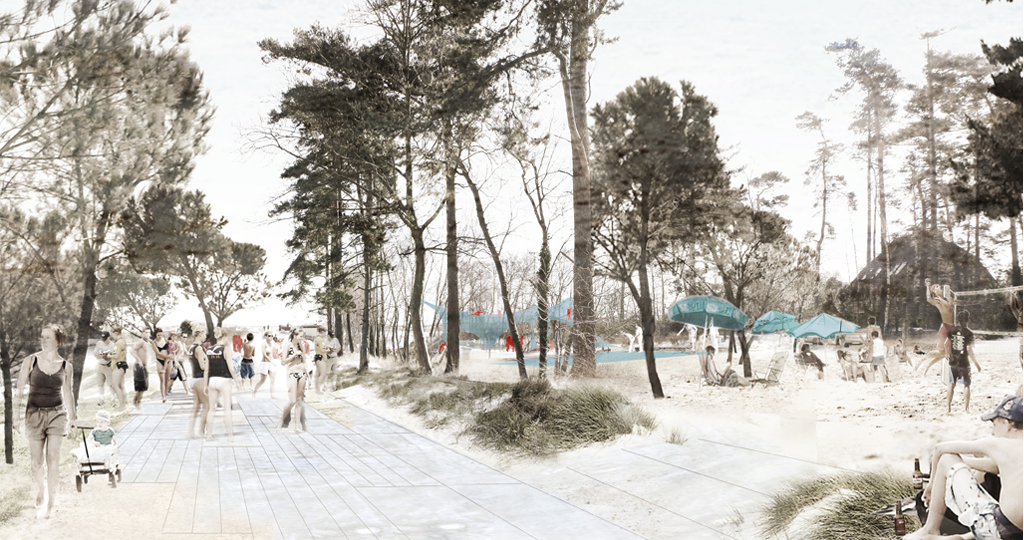
Summer time
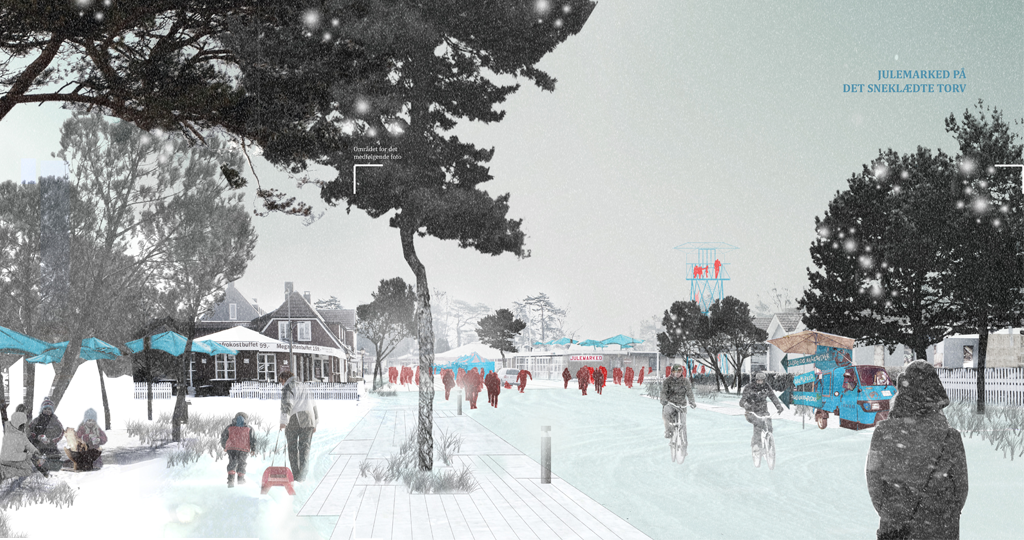
The landscape project focuses on the valorization of the great quality of the natural elements that characterize the site -pines, sea, sand dunes, dike, grass- making them stand out very clearly. The concept of “Delta” appears with the intention of spreading many accesses to these natural landmarks, connecting them through physical and conceptual paths. The Delta structure allows to pull the beach ambience in the urban space, both melted in a fluid unity; the achievement of this atmosphere is possible by choosing very soft and discreet materials to create paths and furniture elements, by substituting the current asphalt with tracks, marks and signs that simplify integration between the two ‘souls’ of the place.
Witer time
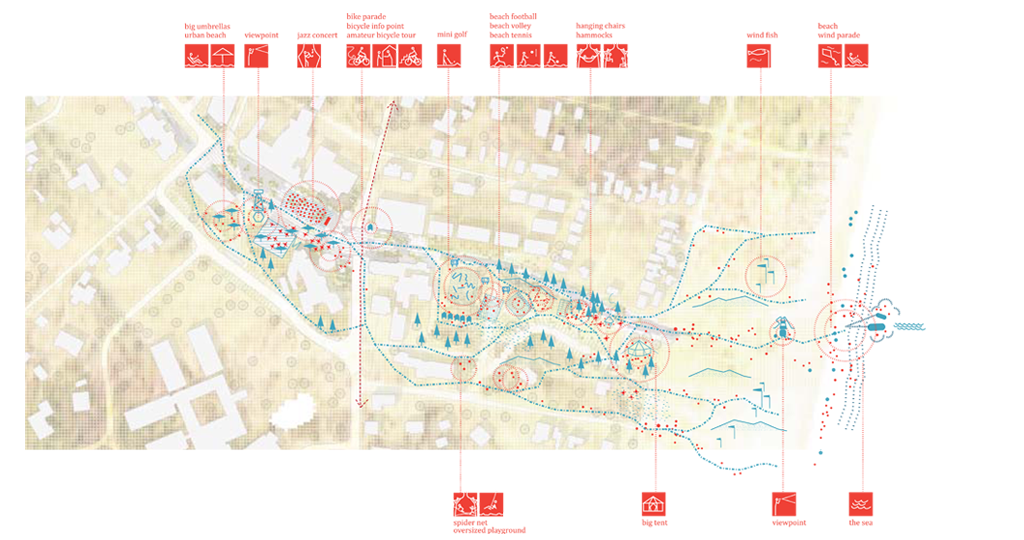
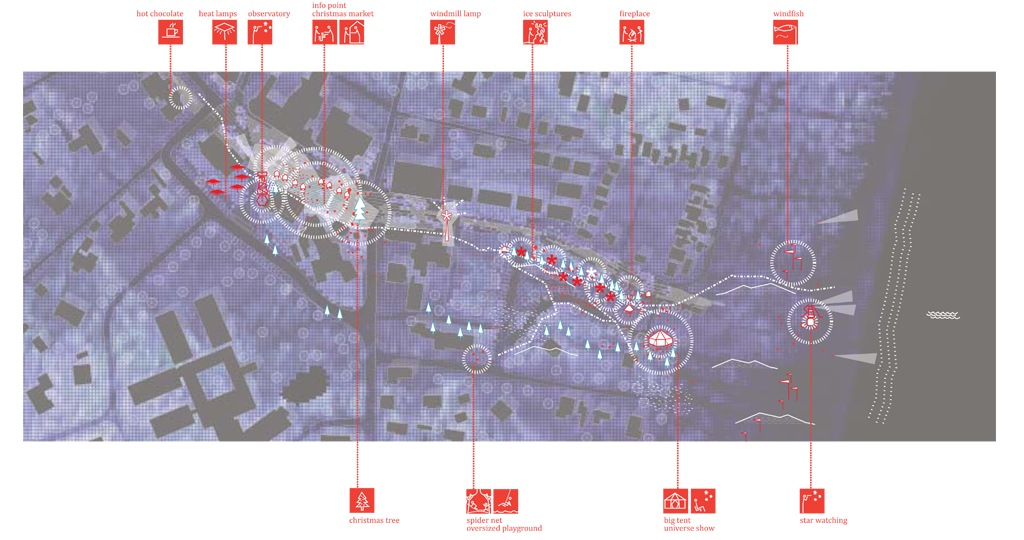
We elaborated one of the main aspects of Marielyst STRAND proposition, the activity plan. “Let it be fun!” is the motto we’ve chosen to summarize our idea to regenerate this area, being certain that the requalification of an urban space could not disregard the involvement of people in making the place alive.
The activity plan during daytime
Activity plan for the night
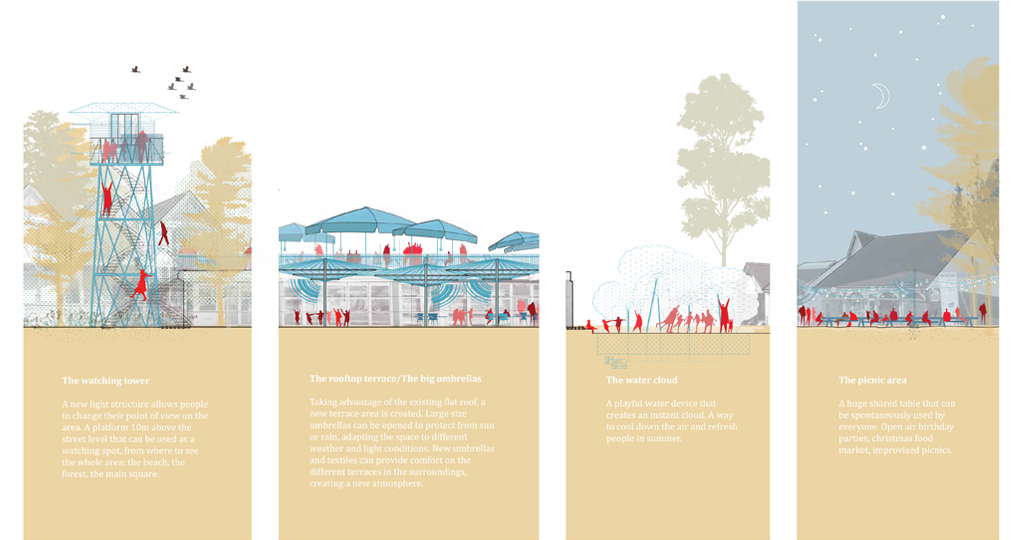
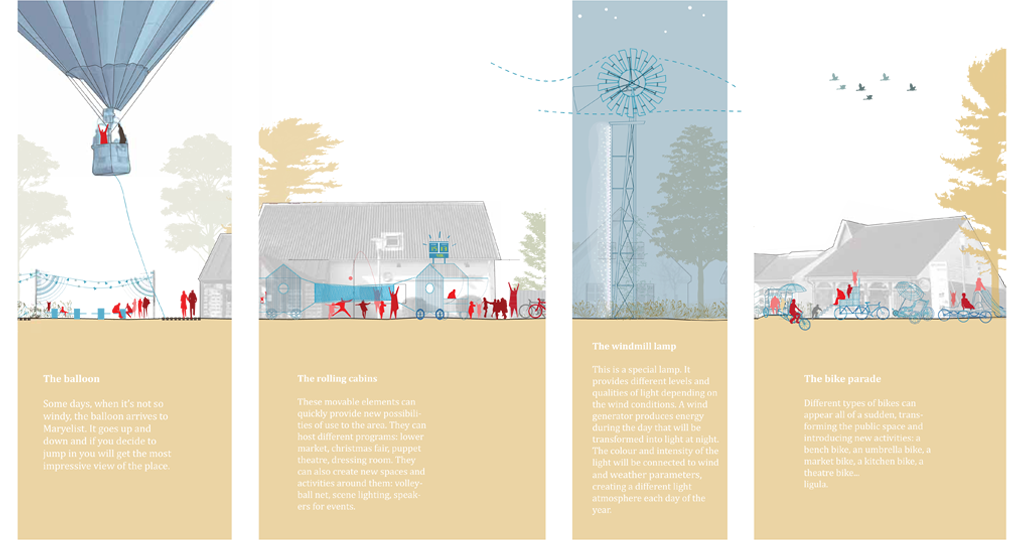
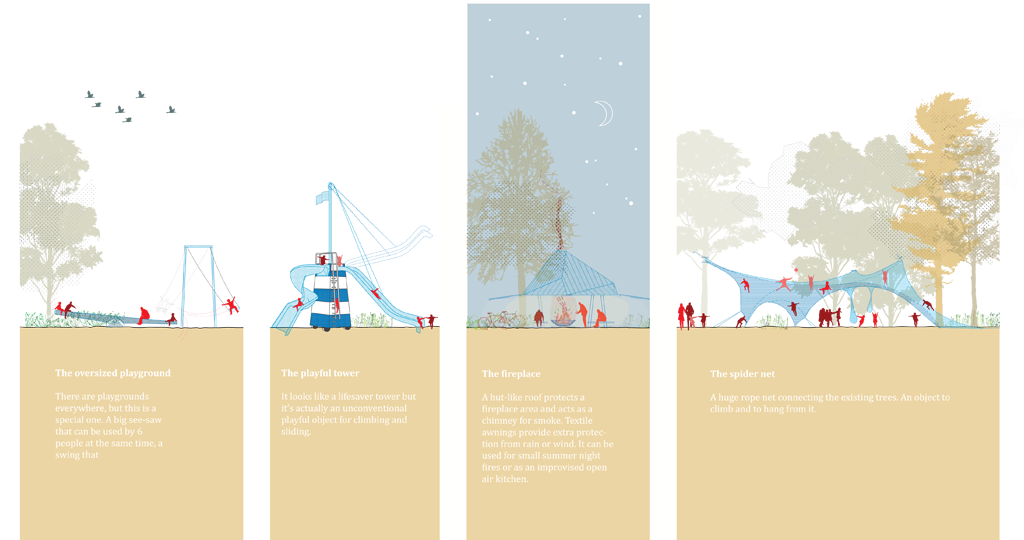
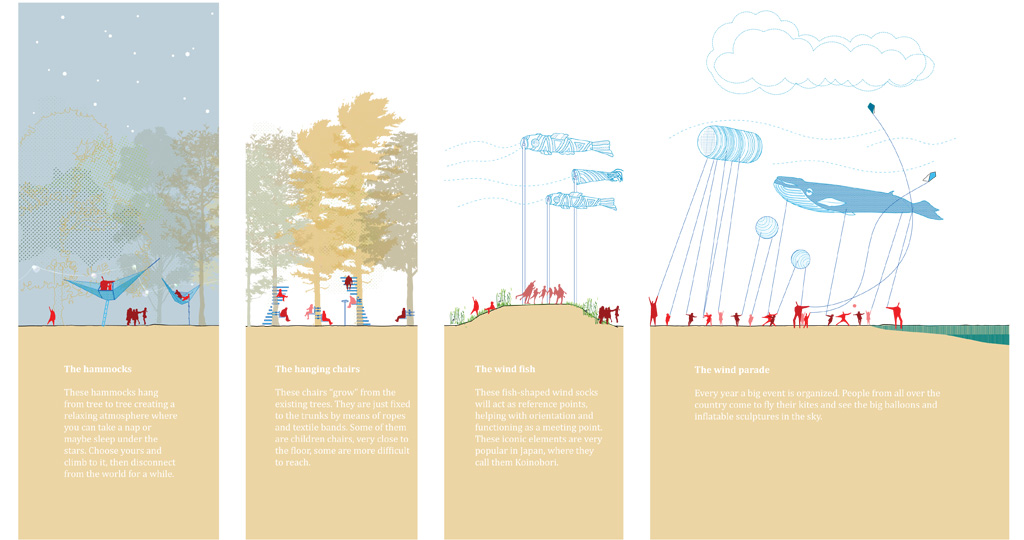
We’ve developed a series of entertaining and bizarre urban objects and we have settled them in the Marielyst area in order to provide several activities aimed to reinvigorate the site during summer as well as winter time. We have tried to get inspired by the surrounding environment to elaborate ideas that allow people to appreciate the visible and the invisible natural local elements.
Catalogue
Our proposition for Marielyst urban contest mainly consisted in designing urban objects strictly connected with natural elements that characterize the site, like rich vegetation, long beaches, fresh water and strong wind. The objective of our urban design strategy for Marielyst was to transform this ordinary beach on the Danish coast in a unique and very attractive site that could easily become a reference point for people who want to spend funny holidays in sustainable way.
Catalogue
The catalogue includes elements to enjoy the view of landscape from above (the watching tower, the balloon in the sky); elements integrated in the vegetation that allow to take advantage of its amenity in an unconventional way (the hammocks, the spider net, the hanging chairs, the fireplace); objects that transform the beach in a big playground (the playful tower, the oversized playground); objects that use wind to catch its power and transform it into energy (the windmill lamp) or just exploit its strength to create ephemeral landmarks (the wind fish, the wind parade).
Catalogue
Other elements are mobile and contribute to constantly change the configuration of the place, like the rolling cabins -temporary supports for sport activities or refreshment bars-, or the vehicles on wheels, a kind of elaborated bikes that could be used to move along the city and create temporary stages, movable slides, or on the road benches. Moreover a big attention is given to the socializing areas, as the rooftop terrace of an existing building along the main street, the picnic area or the water cloud, a playful object very useful to refresh atmosphere during sunny days of Baltic summer.
Jose Luis Vallejo and Belinda Tato will be taking part in the IE Master in Architectural Design kicking off this Autum in Madrid.
The IE Master in Architectural Design seeks to bridge the gap between the existing fragmented post-professional architecture courses and the ever shifting reality of the professional practice. This will lead to a strengthening of two fundamental foundations of the profession: scientific-technological knowledge and an awareness of the underlying contemporary cultural base. This knowledge, combined with entrepreneurial and management skills, clearly plays a key role in understanding the complexity and scope of the profession when it comes to preparing architects to lead interdisciplinary professional teams.
You can read more about the program, faculty, facilities and admissions at the Official website
As part of the MetaMap series, I interviewed Domenico Di Siena, former curator of this blog, about a project he founded in 2007, Meipi, which is a collaborative space where users can upload information and content around a map.
Meipi.org […] is being used by communities, advocacy groups, journalists, artistic collectives, and urban planners to geo-tag information around a topic in a specific region. […] Meipi is a community of developers, designers, and planners that have built and maintained Meipi.org since 2007. Since the software became open source in 2010, an entire community has contributed with its work and support.
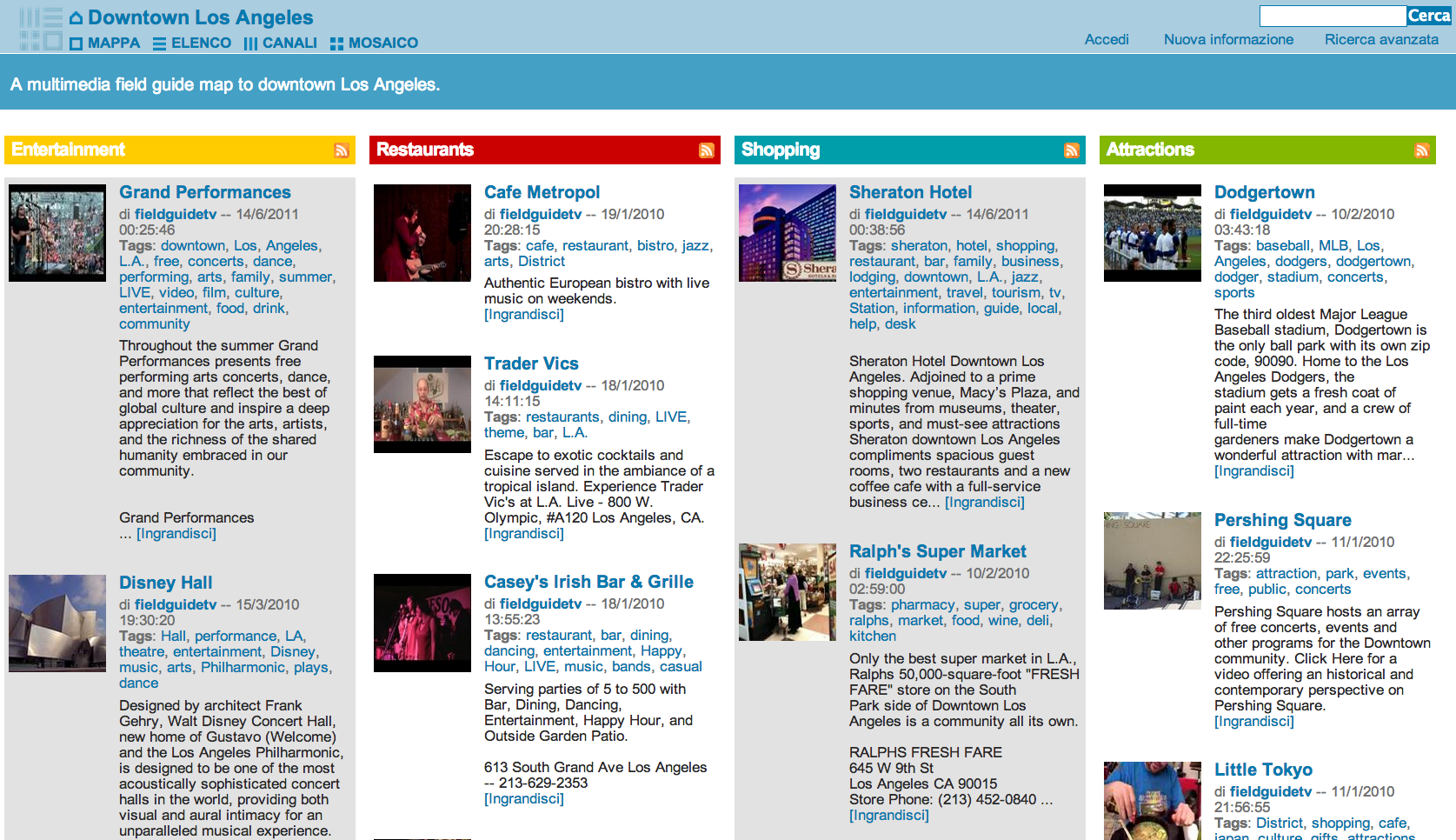
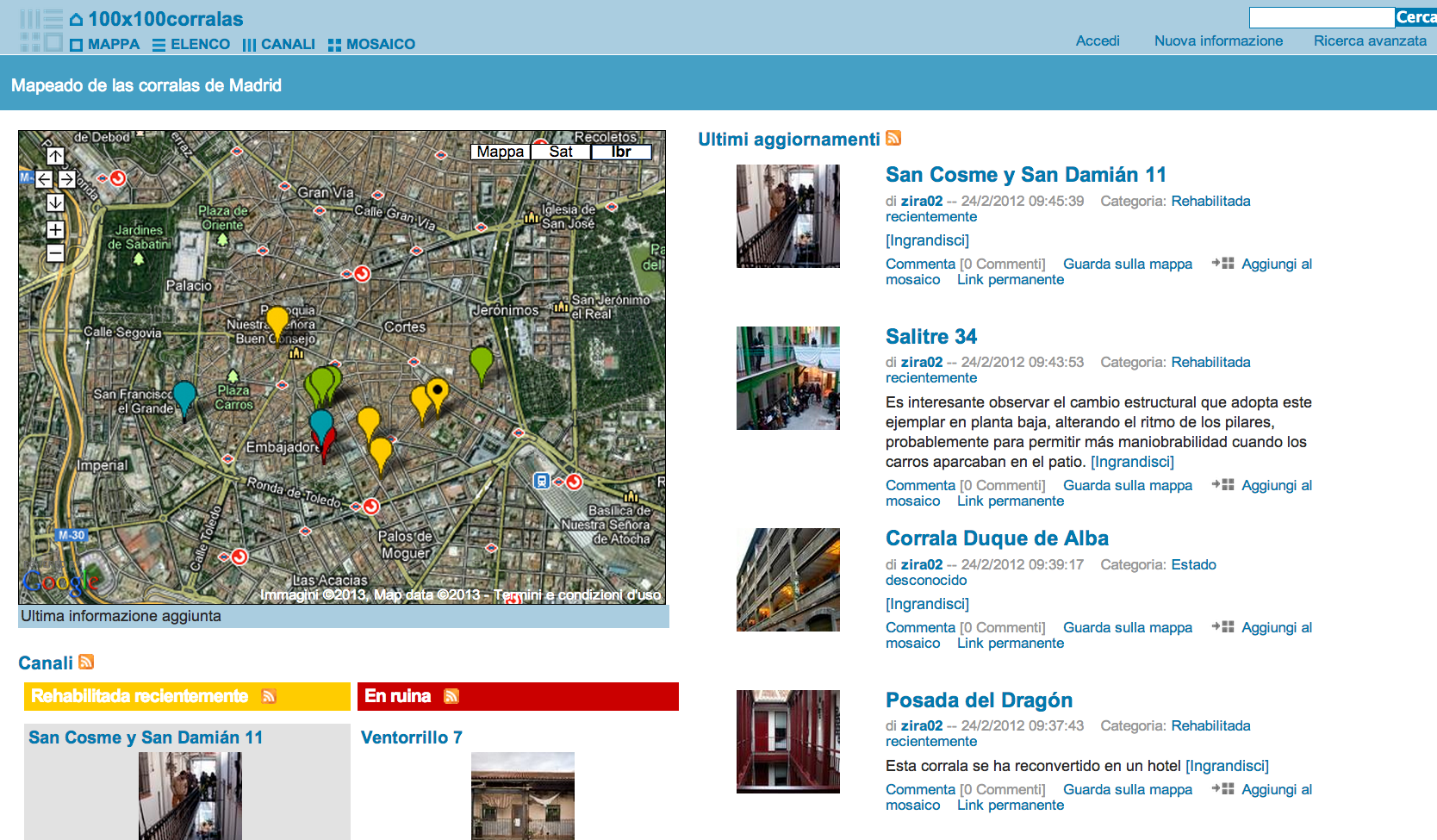
Here you can find some examples of different visualizations of maps currently on the platform:
Multimedia field map of Dowtown Los Angeles
Map of “Corralas” in Madrid
Map of small shops in the Salamanca District
credits:
Meip-it Coordinators: Pablo Rey Mazón (Visiting Scientist, Center for Civic Media, MIT) and Alfonso Sánchez Uzábal (Developer and Researcher at Montera34) Meipi developers, Pablo and Alfonso, both collaborate with the core developers from Meipi.com: Guillermo Álvaro Rey and Jorge Álvaro Rey from Lamboratory, Domenico Di Siena, @urbanohumano, and Francesco Cingoliani, @immaginoteca.
[im]possible living is a crowd-sourcing website dedicated to mapping and reactivating abandoned buildings around the world.
[im]possible living wants to be an enabler and a catalyst of the energies available in every place in the world that are not able to get through and give birth due to the abandonment market and, in general, to a new housing development model. It’s a very ambitious goal, but we truly believe in it and are investing everything in this dream!
I interviewed the two founders, Daniela Galvani and Andrea Sesta, about the project.
1. How did you get to the practice of mapping?
[im]possible living is born from our personal interest in abandoned buildings. At the time we understood that many individuals and associations were spreading energies to map the abandoned buildings in their area, but everyone was doing their own maps, thus losing the possibility of sharing results, experiences, and the best possible practices.
So we decided to create a global map of abandoned buildings via a web platform, where everyone could participate and contribute to a common goal and benefit from the experiences of other people.
Since the beginning of the project we have gone far beyond mapping tools. With the last release of our site, people can now reactivate an abandoned building and involve the community in the design concept for the new life of the building.
2. How is the users’ contribution managed? How does the platform work?
The website consists of a service through which users can surf and see the abandoned buildings that have been mapped around the world, which also shows their profile, containing a general description and some detailed information about the building (year of construction, years of abandonment, square meters, number of floors, etc.) To explore the mapped buildings click here.
The real heart of the service, however, is the reporting and collaboration features, through which users can upload new abandoned buildings and enrich existing records by adding photos and videos. If you would like to begin a map click here.
Users can also use a mobile app for the iPhone to instantly map abandoned buildings. Once launched, the application allows you to choose a photo from the Pictures archive, add essential information and automatically provide the geographic data associated with the location (street, city, etc.), allowing the user to change any incorrect information.
The last new part, which has launched recently, allows users to start a reactivation process. Once an abandoned building is mapped, a user can decide to become the reactivator of the place and [im]possible living provides him/her with a suit of services that helps collect the needs of the area, ideas for the future of the building, and in general, create a community that supports the reactivator in designing a concept for the new life of the building. The platform also tries to connect different kinds of users, everyone possibly involved in the renovation process: citizens, entrepreneurs, professionals, artists, real estate developers, etc.
[im]possible living map
These services are now online and we already have some projects running that you can contribute to or simply surf to get an idea:
3. What is the process you wanted to start with your work? What is the social aim youwanted to reach with your work?
In the last years we have witnessed the constant investment in new construction, leaving behind millions of old abandoned buildings. This process has led to the phenomenon of land consumption in most of the world, but the recent economic crisis stressed the problem even more, condemning the new constructions to remain vacant.
The solution to this problem is taking an altogether new approach: abandoned buildings are not liabilities but assets from which we should take the most possible advantage. [im]possible living tries to promote this new sustainability approach. Instead of building new structures over and over again, we can utilize what already exists. Having abandoned buildings in your city or in your neighborhoods is not only a waste, but it also means trouble, that, in a long term perspective, becomes costly for the public sector.
We are creating a platform available to all, which consists of the most complete database of abandoned buildings in the world. It is a virtual place that everyone can use and all can be shared and discussed, and where citizens can actually have an influence in shaping the future of the place they live in.
Many times the interests of construction companies, or even publicadministrations, are not consistent with the local environment of the area itself. This missing link between those sides can be discussed through the [im]possible living platform, in order to build mutual benefits for both sides. Through the website, entire communities can share their needs and ideas, and this could lead to a win-win situation for all parties involved.
Nowadays, real estate projects are handled behind closed doors and the problem is that often the local population is not involved in the design process. This implies, on the one hand, a mismatch between the purpose of the construction project and the real needs of the urban and social settlement. On the other hand, it takes additional time to complete due to the resistance from local communities, which often brings in legal involvement.
Our aim is to create a more efficient process to reuse abandoned structures, with a benefit for local communities that will be able to affect or even contribute projects on the online platform. A benefit for the public and private investors that would receive important inputs or even entire concepts developed by teams of reactivators and a benefit for the reactivator teams that would pursue their own projects with all the technological, professional, and financial support to fully accomplish their goal.
4. What is the next phase of development that your research will undergo?
We released the reactivation services a few months ago, so now our aim is to expand the community as much as possible and start as many reactivation projects as possible. This is very connected to making the available services better, making the actions easier, making the contributions from the community as simple as possible, and adding new features that can increase the sharing activity on the site.
Furthermore, we want to investigate the real bottleneck of reactivation processes: getting the project funded! In fact, the real problem when you talk about abandoned buildings is that, even with low-cost interventions, using them involves pricey investments. So our question is: How do we ease the investment process? How can we push for better projects and actually bring them to life? It’s complicated research, but it’s definitely what we want to focus on during the next year.
5. What are you personal references for the theme of mapping (from ancient to contemporary ones)?
Our point of view is very connected to recent technologies, in particular, web technologies. We consider the birth of web 2.0 and web 3.0 the beginning of a new era: the shift from static contents to dynamic ones, but more importantly, the participation and involvement of people in crowd projects, tools created for geo-localization, augmented reality, and much more.
This had a dramatic impact on the theme of mapping: for the first time in history, people from around the world could contribute to global mapping projects seamlessly, using services like Google Maps, Open Street Map, Wikimapia, History Pin, Ushaidi, Foursquare, and thousands of other services that are enabling users to map things in the world and share the information globally.
This process is generating a huge amount of data that, in most cases, is openly available to everyone via API systems (in computer science, an API is a way to access private databases, retrieve information, and build a new service using one or many different external data sources) For example, today I can use Google Maps API to obtain geographical information and then use Wikipedia to map monuments and historical places.
The potential of this revolution is very immense and has already started to affect our society in a significant way, but we still can’t entirely understand all the possibilities that will be generated in the upcoming decades.
Three weeks ago (Juny 5th-8th ) we were in Linz, Austria, invited by Roland Krebs for a lecture and a workshop, part of an event called Identity City Lab, which is part of the Creative Region program.
The workshop, lead by local collective Schwemmland and Ecosistema Urbano, was aiming to provide some fresh insights and proposals about the eastern harbour area of Linz, a big extension of former ‘schwemmland’ (alluvial land) turned into an industrial area during the second part of the past century.
Some context
The area highlighted in the first image has been slowly fading out of the citizens’ imagination and become a ‘forgotten’ part of the identity of Linz. Tourist maps end right before the border of that area, which is still one of the most important connections of the city with the Danube and with its own history.
Tourist city map – Click to View PDF
Nowadays, the area hosts an active industry and a working logistic transportation system by rail. Interestingly enough, it contains patches of different uses scattered between the industrial facilities: nature (even protected species live there); cultural or recreational zones like an airfield; private gardening and traces of former agriculture; restaurants and small street stalls that sell food to workers and passersby.
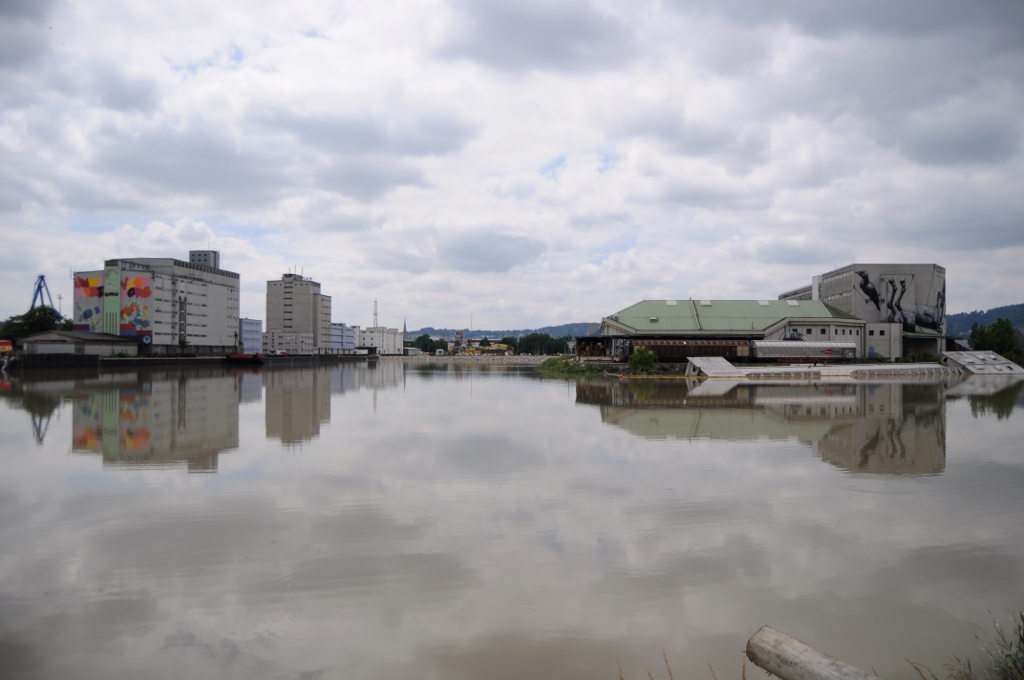
Despite the long decades of industrial activity, the 8 meter deep water in the north-eastern docks is usually calm like a mirror and crystal clear… although during our stay it was very muddy due to the flooding that had happened just a couple of days before.
A basin between the docks – deep, calm water forgotten by the city
Some of the docks were recently filled in order to continue the industrial development of the area, which raised some concerns but can also be seen as an opportunity for the city of Linz to re-think its relation with the harbour and the water.
Here comes urban development: filling at one of the docks
Activities
The workshop started with a guided tour by bike around the area, which gave everyone a clearer insight on its different aspects and the opportunity to meet interesting people living and working there. Then we had a first work session at Schwemmland’s office.
Bike ride by the river
This aerodrome runway is not somewhere in the countryside – it’s right at the harbour!
Traditional food stall between the office buildings
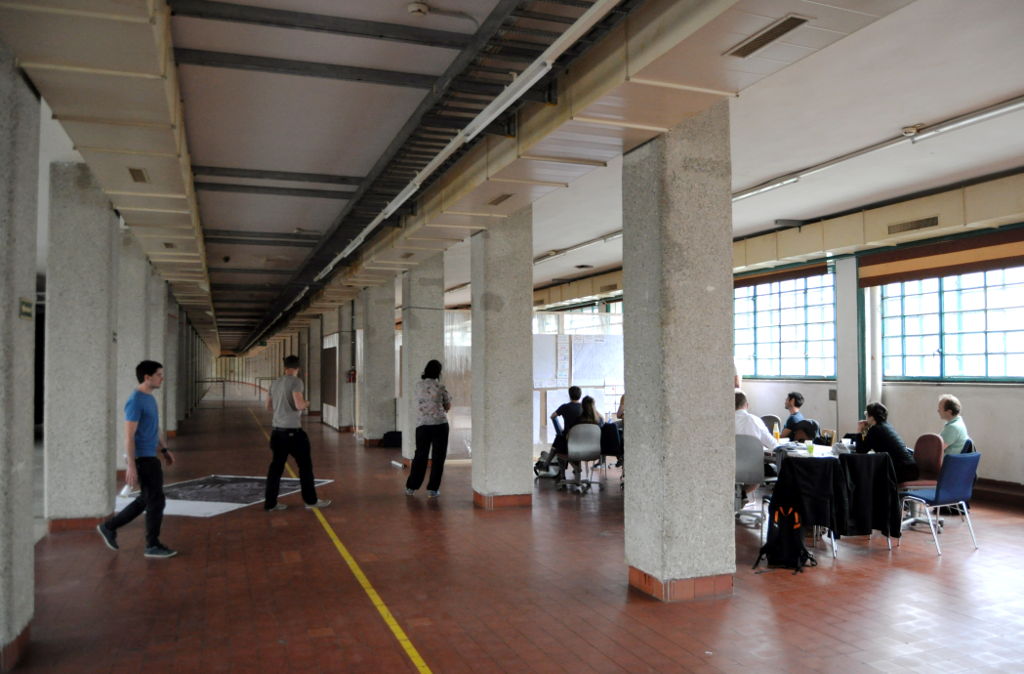
The rest of the workshop took place at the Tabakfrabrik, a ‘great’ (both ‘good’ and ‘big’) example of industrial architecture by Peter Behrens and Alexander Popp finished in 1935, which is now being transformed in a cultural center. Some light and temporary structures built of wood, textile and truss systems created a human-scaled space for everyone to work comfortably in the long hall of the second floor.
Working inside the Tabakfabrik, an amazing industrial building of the early XX century
The participants, divided in small groups or couples, worked in quite different approaches, trying to imagine how the new industrial development that is planned for the area could be made compatible with some other uses or initiatives in order to bring that calm, clear water surface and its surroundings ‘closer’ to the city.
Outcomes
Despite the short time we had for developing them, there were some interesting proposals, so we ended up with a set of complementary ideas that will be presented to Linz AG, the company that manages almost every aspect of the city’s operation, maintenance and development.
An urban kitchen which could act as meeting point for the people working in logistics, industry, creative offices and artistic workshops and become a catalyst for activities, designs and actions on site.
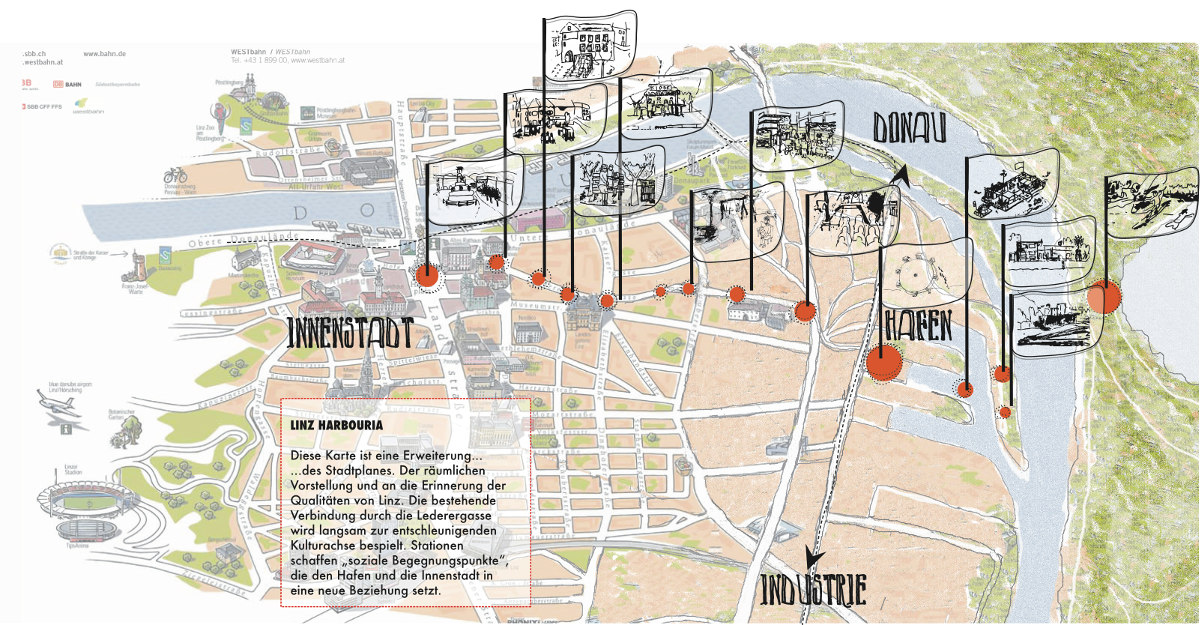
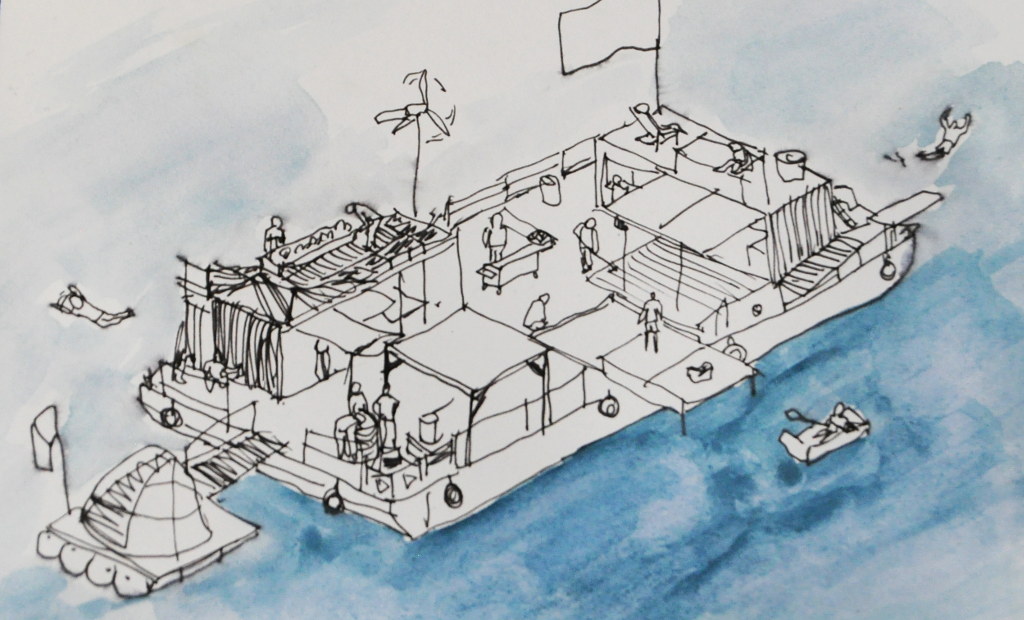
An extension of the typical tourist map of Linz, making emphasis on a west-east axis, departing from the main square and connecting cultural facilities and lively urban places in a chain that would lead to Harbouria, a citizen-driven ‘city’ floating in the harbour.
Extending the tourist map and creating a ‘urban life chain’ from the center to the harbour
Harbouria – a floating ‘cuty’ in the docks
A very critical, almost poetical approach, which stated that the spontaneous activities in the harbour area should be preserved without a direct intervention. They talked about what could happen in the spaces “in between” the planned uses such as industry. Could we respect these emergences without trying to plan them?
Explaining how to keep spaces of opportunity without directly pointing at them
One of the proposals was to always keep a public fringe always available and accesible right on the border between the ground and the water. Simple to explain, but with very significative potential results.
And another one approached the place from the point of view of nature: letting the ecosystem take part of the docks back and creating a quiet and slow natural cycle inside the human hectic cycle of production.
We hope that the city will take these suggestions seriously and develop them further. The harbour is an amazing space where the city and the Danube really meet each other, and it shouldn’t be neglected as a potentially valuable public space.
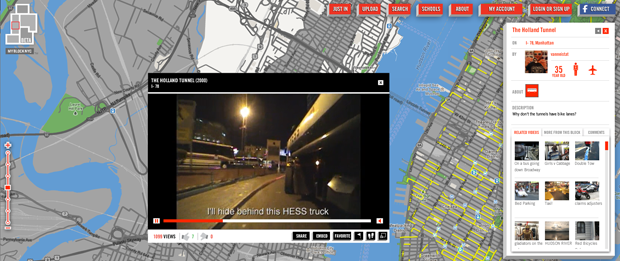
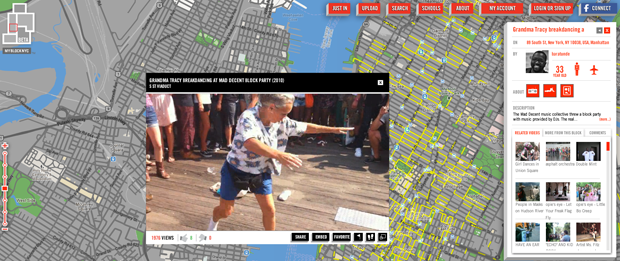
Today we present a New York based video mapping project, MyBlockNYC. They define their project as:
MyBlockNYC.com is an interactive video mapping website that captures and presents personal video accounts of life and culture in New York City in order to create an intimate, evolving, and complete portrait of the great city. Users upload videos geographically, creating the first fully interactive video map of New York City.
The MyBlock Assignment is:
Share the moments you see on the wild streets of New York City. You can upload videos you already have on your cell phone and computer, or explore the city and capture what you see. Each video should be shot outdoors and take place on a single block.
I interviewed Alex Kalman, founder of the platform.
Here’s a few examples of videos on the platform:
The Holland Tunnel
Grandma Tracy breakdancing at Mad Decent block party
Jimmy Justice
This is the second post in the MetaMap series about mapping. You can follow the conversation on Twitter, Google+, Diaspora, or Facebook through the #metamap hashtag.
Accurat is an information design agency based in Milan and New York, founded by Giorgia Lupi, Simone Quadri and Gabriele Rossi in 2011.
They define their work as the following:
We envision and identify new ways to structure information, revealing and addressing latent needs, desires and opportunities. Basing our methods on the design thinking approach, we specialize in providing our clients with consultancies, services, and products related to information design. Focusing on how information is transforming networks, cultures, contexts, and behaviors is an attempt to understand the future, a demonstration that it can be intercepted and designed.
I interviewed them about Big Data base maps and about their ongoing work in mapping: ✳Urban Sensing.
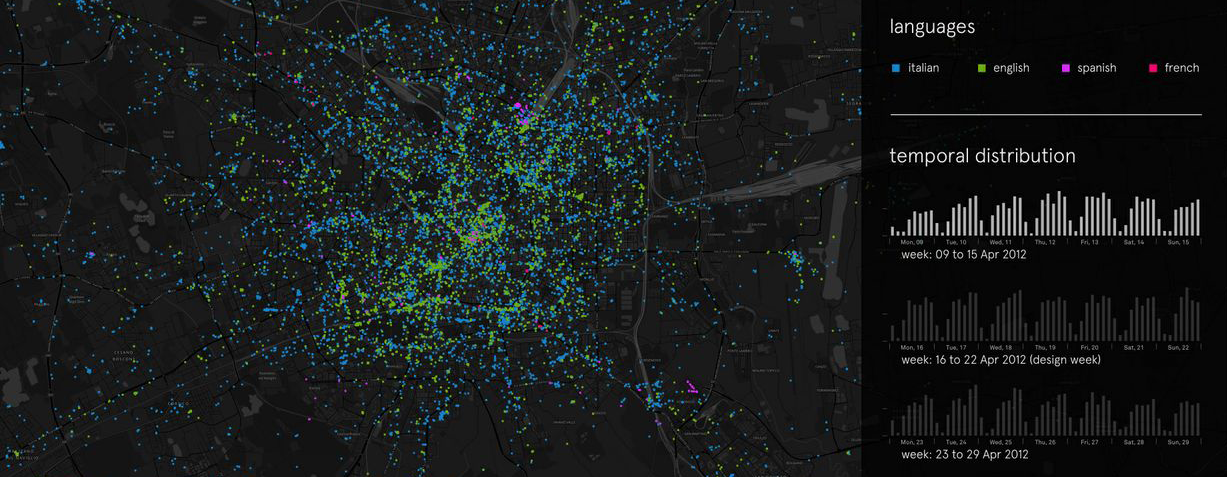
Experiment of Tweet mapping in Milan during design week
1. How did you get to the practice of mapping?
To us, mapping could be seen in a broader context as “structuring information”.
To start off, it’s not needed to say that information related issues are at the core of any design project that deal with cities, public services, society, and behaviors regardless of scale. Particularly, we have always been interested in urbanrelated projects that deeply rely on information: contexts, analyzing data, designing analytical tools, and visual narratives that provide awareness and comprehension of changing urban dynamics.
In our past entrepreneurial experiences, at Interactiondesign-Lab, we experimented working between the intersection of information systems and urban dynamics within the design of the Plan of Services for the Municipality of Milan (developed between 2009 and 2010). We designed a plan not to be intended as a product or document, since it was developed as a continuous process of listening, monitoring, reporting, and crossing the needs and the offers in terms of services of the city.
We designed 2 tools at 2 different scales, the macro scale of the city and the micro scale of the neighborhood. These tools don’t define what services we plan to have, but they give directions on how to cross the demand and the possible answer in terms of services in a meaningful way. It was, in fact, an information design project.
2. In what way do you obtain and treat the data for your mapping?
A big mapping project we are currently working on and coordinating at Accurat is ✳UrbanSensing.
The ✳UrbanSensing project is a EU funded project which aims to design and develop a platform for extracting patterns of use and citizens’ concerns with city spaces, through robust analysis of User Generated Content (UGC) shared by city users over social networks and digital media. The platform will allow the user to analyze citizen’s perceptions related to specific geographic areas and understand how population reacts to new urban policies within participatory mechanisms.
Novel digital and telecommunication technologies can be deployed to integrate data-sharing platforms within the spatial dynamics of the city. If properly analyzed, geo-tagged and User Generated Content (UGC) coming from Twitter, Facebook, Foursquare, or Flickr can be useful in the creation of meaningful, real time indicators of people’s perceived and communicated urban experiences. Through natural language and network analysis, it is possible to identify the nested micro-narratives that shape the behavioral and semantic background of a place and to extract specific urban indicators.
Our assumption is that by conducting an analysis of datasets based on text extracted from UGC we can recognize multiple stories, as they emerge, overlap and influence each other, unfolding from city users’ mental representations and spatial experiences of city spaces. In fact, by providing tangible, visible references, the spaces of actual buildings and cities participate in constructing the meaning of the speech that articulates itself within them and as conversations unfold within particular architectural settings, they build up increasingly dense webs of shared understanding grounded -at least in part- on the points of reference that these settings afford.
Thus, within ✳UrbanSensing we are mainly gathering and analyzing geo-localized social media data (Twitter, Foursquare, Instagram, and Flickr); and such data will be properly integrated and compared with more traditional sources of urban information (socio-demographic territorial data, real-estate indicators, and environmental data) to produce dynamic and evolving images of the city as used and perceived by its’ citizens and temporary users.
3. What is the application of open source/social network-based mapping you are interested in the most?
If properly analyzed, integrated, and interpreted, Social Media data can help stakeholders at the urban scale to “forward-looking” innovation strategies based on a thorough analysis of people’s contexts, interests, and needs.
Among the possible urban topics this data could partially answer to, we will narrow them to the following particular issues:
Rapidly intercepting emerging urban dynamics, such as gentrification processes and precise areas’ evolution through time (for identifying trends in areas’ related phenomena, in the exact moments they’re originated, with the possibility to add more dynamic parameters to those used by the real estate market);
Understanding which are the factors (e.g. morphological aspect, aesthetic quality, public service availability and density, infrastructure granularity, cultural scene, and commercial service) that attract people in particular places (areas, neighborhoods), and how this evolves through time;
Understanding which kind of people (language / on-line influence / demographics) are in specific areas at particular moments;
Highlighting patterns of movement throughout the city (from which places people in an area come from? where are they going? are they residents, visitors, or ordinary city users?);
Interrogating data about a particular topic (e.g. brand name, event name) or about a selected theme (e.g. cultural phenomena, cutting-edge topics) to see how things evolve spatially and temporarily.
All this, to provide a better understanding of an areas’ related phenomena and evolution, to redefine actual districts’ fixed boundaries and to see where public services, policy’s infrastructures, design interventions, or activities could be better located, and to try and build models to predict near-future evolution;
Experiment of Tweet mapping in New York
4. What is the next phase of development that your research is undergoing?
One of the forthcoming steps of our project is to gain a deeper understanding of:
How such data sources could be interpreted (in terms of sharing behaviors and motivations) to get actual and consistent insights;
Which are the real limits of such data in terms of research (e.g. demographic, digital divide, economic, location-related);
How to overlap and integrate such data sources with more traditional layers of territorial information (e.g. socio-demographic data, income data, rental costs, ethnic data, and environmental ones such as pollution and sanitary inspections, etc.) to finally display extreme high-resolution views and interpretations of territorial related dynamics.
How unexpected patterns and meaningful questions could emerge from data themselves.
In fact, UGC differs from conventionally produced geographic information in several aspects. The source of the information, the technologies for acquiring it, the methods and techniques for working with it, and the social processes that mediate its creation and impact. Traditionally, geographic information has been produced by experts and institutions, therefore, certain types of information have been privileged and other types ignored, and even marginalized. UGC’s represent a powerful shift in sources, content, characteristics, modes of data production, mining, sharing, dissemination, and use. Therefore, a wide set of meaningful questions (that have been partly investigated for “conventional” geographical information) need now to be re-investigated, and a framework on how to use these information still has to be built.
In parallel, we are designing and developing the technological architecture and the actual interface allowing us (and lately, stakeholders) to perform specific queries and produce such dynamic maps in a very visual and intuitive way.
5. What are you personal references for the theme of mapping (from ancient to contemporary ones)?
We would here focus on emerging critical practices that propose new models to describe the city that stresses the collaborative and constructionist dynamics of the mapping process.
The underlying idea of this approach considers the geographic, urban experience through a network of multiple fragmented temporary data and information generated by human-place interactions and collaborative dynamics. Based on these theoretical premises, several experimental GIS-based applications focusing on cartography emerging from users’ perceptions and activities have been produced.
As Zook & Graham noticed, traditional methods used to register users’ perceptions and activities about the cities and its fruition – like surveys and ethnographic reports – seem to be inadequate to meet the need of information of contemporary society both because they require a considerable amount of resources (in terms of time and money) and because they do not consider the temporal dimension.
Senseable City Lab explored mapping systems based on UGC on several projects like World’s Eyes and Obama One People.
Current City, a European foundation committed to address long-standing city management problems in unconventional ways, explored the potential of urban mapping based on real-time data streams on users’ location coming from telco providers.
Christian Nold’s work focused on in-depth research of technological tools in order to unravel their social and political layers, and on building socially constructive, bottom-up devices, that take the form of practical tools such as in the Bio Mapping project.
Bio Mapping is a research project based on biometric sensors that can be worn by users provided with a GPS device able to trace their paths through the city, and that register specific parameters (e.g. emotional status in a specific place or situation) and publish them as user generated content on specific emotional maps. This project explores tools that allow people to selectively share and interpret their own bio data. Within this framework, Nold investigates how the perceptions of a community in an environment can change when they become aware of their own intimate emotional status.
Some other recent GIS projects focused on the idea of building open tool-kits that could be used by the community of students and practitioners of urban design, planning, and management. The Centre for Advanced Spatial Analysis at UCL created MapTube as a free resource for viewing, sharing, mixing, and mashing maps online and the NeISS project (National e-Infrastructure for Social Simulation) provides a platform to meet the demand for powerful simulation tools by social scientists and public and private sector policymakers. The tools enable researchers to create workflows to run their own simulations, visualize and analyse results, and publish them for future discovery, sharing, and re-use. This facilitates development and sharing of social simulation resources within the urban planners and social science community, encourages cooperation between model developers and researchers, and helps foster adoption of simulation as a research method and as a decision support tool in the public and private sectors. Design Tool is an application proposed by Predrag Šiđani, which has its starting point in Lynch’s propositions about city and urban form. Lynch’s theory of urban form and its hierarchical structure of main urban elements were applied, together with his concept of cognitive mapping, to a conceptual model of the Design Tool.
This is the second post in the MetaMap series about mapping. You can follow the conversation on Twitter, Google+, Diaspora, or Facebook through the #metamap hashtag.
credits: Giorgia Lupi and Gabriele Rossi (accurat.it) acknowledgements: texts above are part of the ✳UrbanSensing project
Design Week Tweets: Accurat with Marco Vettorello (data gathering) and Paolo Patelli (data processing and visualization)
Thanksgiving: Accurat with Marco Vettorello (data gathering and processing)
Maps and cartography have been, traditionally, tools to express and exercise power and have been used exclusively by a few people who held the knowledge. Nowadays, this practice is enriched by more and more nuances and gets contributions from all sorts of fields.
We find maps exposed in galleries, painted in the streets, and drawn as acts of performance art, dealing with the necessity to express identities and culture in mass societies. We see maps based on a huge amount of information and realtime data coming from social networks, which were only made possible once computer science and the web appeared, thus enabling us to have an unprecedented knowledge of what’s happening in cities. Cartography is even used as a tool to emphasize critical aspects of our society that, otherwise, wouldn’t be noticed and as a platform to solve these same problems.
All of these multiple approaches are becoming a common experience as they are often the result of a participative process and are shared as open source information. On one side, this shows the need of understanding the growing complexity of reality and the quantity of information that is being produced. On the other side, it expresses the need to re-create an identity through self-knowledge in the actual context of globalization.
I have decided to examine the current state of cartography due to the influence it’s having on many fields today, with the power to be transversal with the classical arts. This research is an ideal continuity with the exhibition that was recently hosted by Caixa Forum (Madrid), on contemporary cartographies. The exhibition started with the situationist and surrealist approaches that opened up the mapping discipline, introducing contaminations from other fields (art, politics, statistic…) overcoming the scientific point of view, showing it lacks the description of reality.
The aim of my investigation is to make a MetaMap, a research on different types of maps I come across, in this meta-map we will see the multiplicity of possible outputs, as well as the common points between them. Taking advantage of the web and its horizontal-knowledge rather than the classical vertical and deepened knowledge. The research was made seeking projects and asking the same set of questions to the authors. These interviews should make it possible to separate the different tendencies and intentions of mapping, tracing connections, and intersections. I manage to focus on particular authors by interviewing them to better explain their work.
This is the list of posts published in this series so far:
The posts in this series by our collaborator, Tommaso Miti, were be published once a week under the MetaMap category. You can follow the conversation in your favourite social network through the #metamap hashtag.
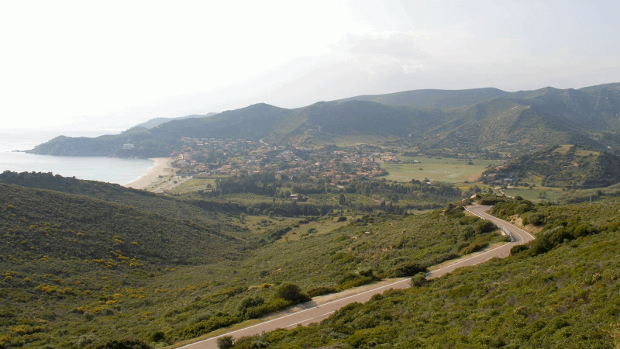
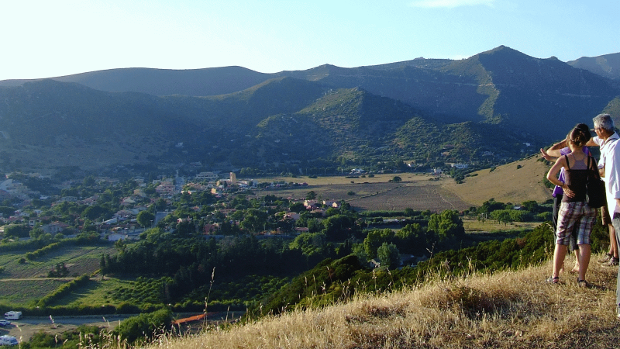
Next Thursday June 20th registration will be closed for the International Summer School, in which more than 20 teachers and 40 students will develop new forms of architecture, particularly related to tourism, in the valley of Solanas and in the coastal area in the south-eastern part of Sardinia.
Save the dates: July 3rd – July 13th
Special deal for European students: 50 € fee + 100 € for 10 days lodging
Learn more about this experience: coastal-landscape-architectures.blogspot.it




![[im]possible living](https://ecosistemaurbano.org/wp-content/uploads/impossibleliving02.png "[im]possible living")
![[im]possible living map](https://ecosistemaurbano.org/wp-content/uploads/impossibleliving01.png "[im]possible living map")