Comments: (0)

Networked Urbanism: The real learning begins when things go live | part I

Category: ⚐ EN+creativity+ecosistema urbano+networked design+networkedurbanism+publications+urban social design

GSDbook_654

#networkedurbanism is a series of studios taught in the Urban Planning and Design Department at the Harvard University Graduate School of Design between 2010 and 2014.

The #networkedurbanism studio aims to bring network-design thinking to the forefront of design disciplines and strives to solve real-world problems on the ground, providing an alternative to the traditional approach of designing urban environments from a bird’s-eye view, and a single designer’s perspective. Networked Urbanism not only examines the physical dimension of the city, but also its social processes and fluxes, developing initiatives that generate spontaneous transformations and set up conditions for change.

The #networkedurbanism studio provides the framework for students to pursue their own interests, find their own means of expression, and create their own paths. They are encouraged to work with others, to create connections and to search for new problems and opportunities that underlie our society, visibly or subtly. Overall, they are expected to explore the city and design new tools to creatively improve urban life.

The following conversation with Paul Bottino is an excerpt from our publication Networked Urbanism, Design Thinking Initiatives for a Better Urban Life

Paul Bottino is cofounder and executive director of TECH, Technology and Entrepreneurship Center at Harvard.
TECH’s mission is to advance the understanding and practice of innovation and entrepreneurship through experiential education: by initiating, advancing and informing student projects. TECH helps faculty create and deliver innovation and entrepreneurship project courses, provides students with project support and sponsors and advises student groups working to build the Harvard innovation community.TECH is based on the belief that boundaries—between disciplines, people, organizations, and ideas—need to be crossed continually to create the insights that lead to innovations because socially useful and commercially viable advancements require the right mix of scientific and engineering knowledge, entrepreneurial know-how, and worldly perspective.

Belinda Tato and Jose Luis Vallejo (BT&JLV): TECH promotes experiential education, a pedagogical approach that informs many methodologies in which educators purposefully engage with learners in direct experience and focused reflection in order to increase their knowledge, develop their skills, clarify their values, and develop their capacity to contribute to their communities.
Networked Urbanism studio incorporates this methodology, requiring participants to leave their comfort zone in order to introduce them to realities in today’s society – outside the walls of Academia—in which designer’s skills are needed. Do you think that this non-academic, feedback-driven process should be used more often in design courses? Does it help to foster an entrepreneurial spirit among students?

Paul B. Bottino (PB): Absolutely. Though it is only non-academic in the sense of that word that means concerned solely with matters of theoretical importance. I consider it academic because it is central to learning, which is my chosen sense of the word. The kind of experiential education that my students and I practice does have practical ends as well as theoretical. But in a creative economy, where knowledge is the primary means of production, education is inextricably linked to practical ends. All of the educators and learners I know—be they at the lifelong, higher, secondary, elementary, or natural level—want to create useful knowledge for their desired ends, and those ends include everything imaginable on the spectrum of human experience. In my case, and I believe this is true of the Networked Urbanism studio, the end goal is to help build students’ innovative capacity.
In order to do that, educators and students must jointly go on an implicit knowledge exploration.

It is obvious but worth saying that knowledge about the future and the new designs that will inhabit it is not explicit, meaning you can’t enter search terms in Google and get answers, even if Google had access to every bit of knowledge available. Instead, it is a research process in which you craft a probe in the form of a design concept and take it to people to educe knowledge about it. If it is a new concept, which it must be to qualify as a potential innovation, then it is going to generate new thoughts. The designer takes those new thoughts not as answers, but rather as feedback. The endeavor of the designer is to transform concepts into value. Value is a utility function; it derives from the use of designs by some number of people. So the essential way designers create value is by engaging in a process of formulation-feedback-reformulation that transforms neurons firing into words, visuals, prototypes, and designs. In my experience, learning via this process is the only way to develop the kind of embodied knowledge that lasts and evolves. Willingly engaging in this full experience and being vulnerable to it is the essence of the entrepreneurial spirit. And, as Oliver Wendell Holmes, Jr., is quoted, “A mind that is stretched by a new experience can never go back to its old dimensions.”

BT&JLV Networked Urbanism encourages students to choose a topic at the intersection of their interests and society’s needs. They have to take the initiative and make decisions. Projects become unique and linked to their personal stories and many of them live beyond the term. This isn’t the traditional academic approach but it is a common entrepreneurial construct, and designers are increasingly expected to define both the problem and the solution. Do you think that “problem finding” skills have become a fundamental base for innovation?

PB Yes, most certainly. I would say those skills always have been essential to innovation, but it is probably more apt to call them something else because in many cases you don’t need to find the problem, it is in clear view. Consider certain diseases where the problems are well known—when a treatment or cure is discovered, invented, and developed, it is very likely immediately deemed an innovation. This is a process of innovation that occurs almost entirely by devising a new solution to an existing problem. I think it is fair to differentiate creative problem-solving, where the problem is given or known, from innovating, where it is not, yet still call creative solutions that are widely used, innovations. To this way of thinking, the full experience of innovating starts with some kind of finding—finding problems people don’t know they have or finding opportunities others don’t see. These kinds of findings emerge from change. Change causes uncertainty about the meaning of existing things and whether they are still useful and valuable. The designer interprets change, sees things differently, and creates new meaning and value. Because there is so much change, the possibilities are endless so it is essential to filter them through one’s values, interests, and capabilities to make a starting choice. This is wonderful for the educational experience because it supplies personal purpose, relevance, and intrinsic motivation to the exploration.

BT&JLV One of the crucial benefits during the Networked Urbanism studio has been the cross-pollination of students with many different backgrounds from all the programs within the GSD. Moreover, the collaboration with people outside of the studio enhanced the innovation of the projects exponentially, since students are required to build up connections with others, creating a network of advisors and professionals within the field, as well as existing and potential community members. Is interdisciplinary collaboration now a necessary ingredient for successful entrepreneurship and innovation?

PB It is probably too much to say that it is absolutely necessary in all cases because there will always be instances of people seeing things differently and innovating without too much assistance, but it feels like those are edge cases that are more and more extreme. More the norm is where the challenge is complex, and seeing and approaching things differently comes from a combination of perspectives and abilities. It is often hard for one person to see things differently. Some people are more agile than others at changing frames internally; most need collaboration and other inputs to do it. I think this is due to a combination of the way our neural pathways are formed and maintained and a lack of meta-thinking practice. That combined with increasingly specified knowledge domains and the training and concentration necessary to master those domains means collaborating with people from other areas, worldviews, and walks of life increases your chances of seeing things differently, getting the diversity of feedback you need and finding the knowledge resources you need to create value.

The second part of the conversation with Paul Bottino has been published in this post.
Comments: (6)

Reinventarse o Morir. Transformación de Centros Comerciales bajo el nuevo paradigma económico/urbano

Category: ⚐ ES+arquitectura+ecosistema urbano+espacio público


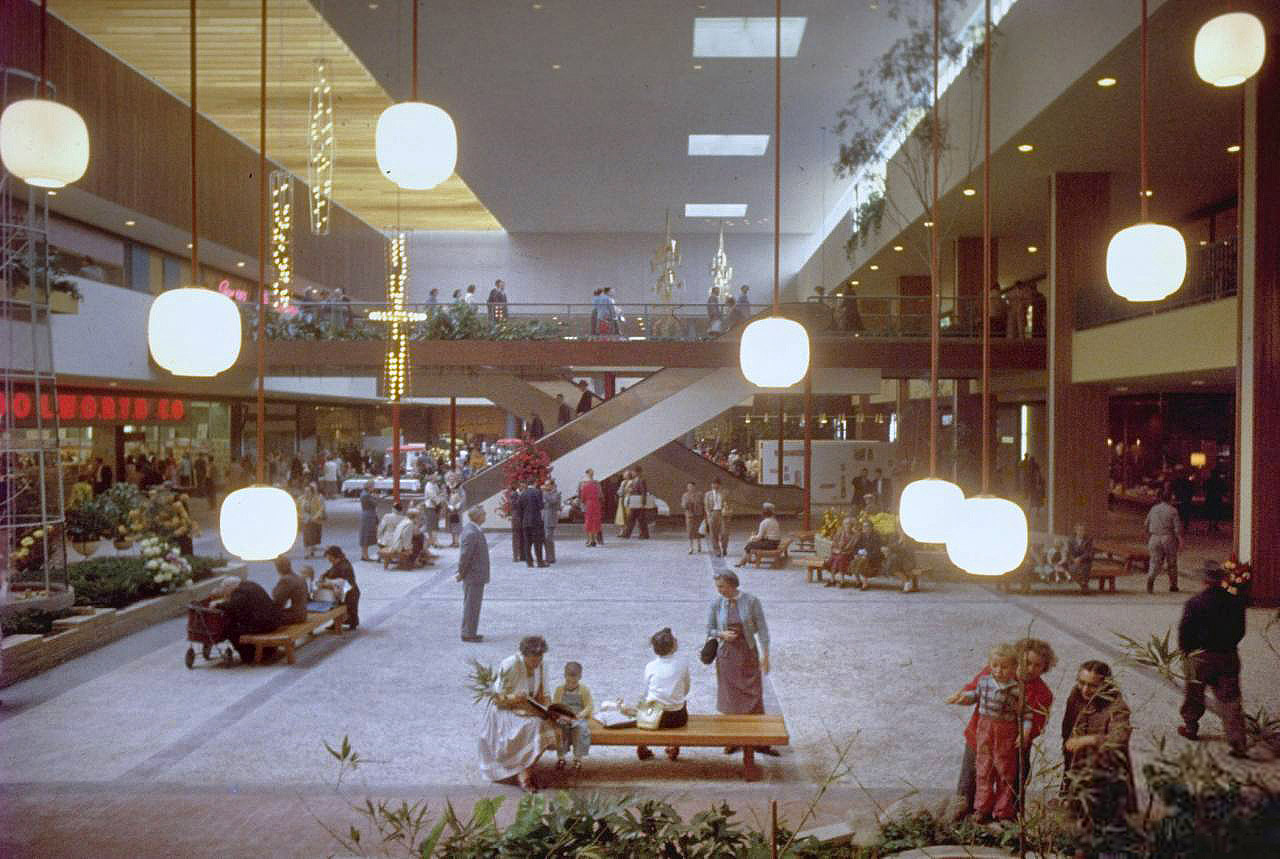
Southdale Mall circa. 1956. Via Shorpy

Hace unos meses tuvimos la ocasión de comenzar a trabajar en un proyecto absolutamente conectado con la situación actual de cambio económico/urbano, la revitalización urbana de un centro comercial. Un espacio genérico, en un lugar genérico de cualquier periferia urbana. Para nosotros, diseñadores sociales urbanos preocupados por detectar las necesidades de la sociedad contemporánea, este proyecto ha sido una inyección de realidad muy estimulante que nos ha obligado a reconsiderar nuestra posición sobre los centros comerciales y su papel en la ciudad actual.

El concepto de centro comercial, como lo entendemos y experimentamos actualmente, podría tener los días contados. No hace falta ser “un Krugman” para darse cuenta de esto. El mundo de los centros comerciales, que ha gozado de gran gloria en los últimos años, no ha sido precisamente un terreno de experimentación e innovación. Se trata de un modelo, que importado de Estados Unidos, y muy vinculado a la movilidad en coche, se ha implementado en distintas geografías y culturas con limitadísimas variaciones. Las mismas marcas, la misma gastronomía en una atmósfera absolutamente genérica, controlada, climatizada y desconectada del exterior, tanto física como culturalmente. Una atmósfera idónea sólo para consumir, sin ni siquiera proveer espacios de descanso o las condiciones para que los espacios “comunes” funcionen como un verdadero espacio público, entendido como espacio para la relación entre las personas, la socialización. Un espacio interior, de propiedad privada, y con unas normas de utilización muy restrictivas, que emula un espacio “público” exterior.

Lo peor para la innovación urbana es que cualquier tipología gastada y repetida hasta la saciedad sea rentable económicamente. En esa situación podemos llegar a pensar, erróneamente, que lo estamos haciendo bien, porque el dinero manando sin fin es el mejor antídoto para reflexionar sobre otros muchos aspectos, tanto o más importantes que el balance económico. Ahora toca preguntarse: ¿Era tan malo pararse a pensar durante un instante?

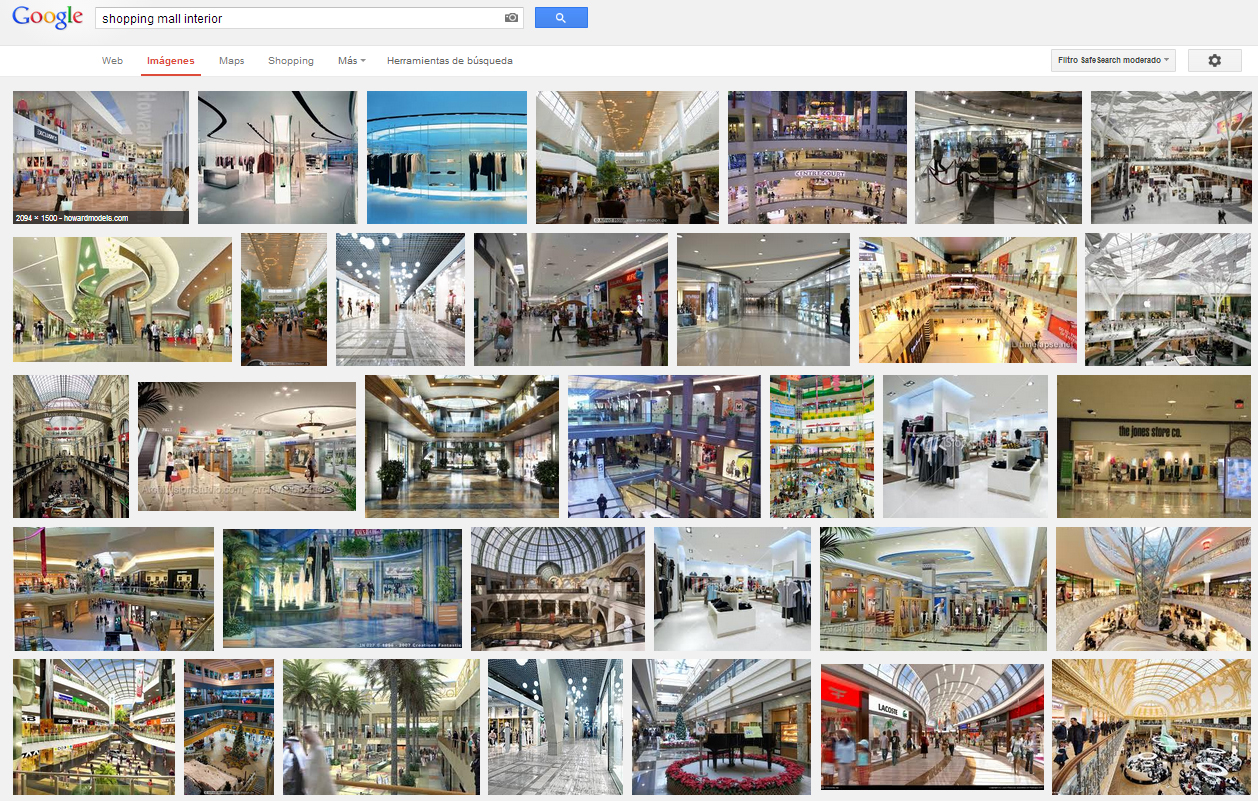
Como primer ejercicio, hicimos una búsqueda en Google (shopping mall interior) y este es el resultado:


Es curioso ver cómo edificios en contextos tan distantes y distintos, ofrecen espacios, soluciones y elementos tan homogéneos. La primera anotación que se podría hacer es que la estética y la filosofía que hay detrás de estos malls, así como su finalidad exclusivamente de ‘máquina para vender’, son muy similares en cualquier parte del mundo. Edificios como estos representan plenamente el fenómeno de la globalización del lenguaje arquitectónico y de la reproducción de un modelo social y económico a escala mundial. Muchos artistas han interpretado y registrado esta realidad; entre ellos el fotógrafo Michael Galinsky, que en 1989  a la edad de 20 años, decidió realizar un viaje recorriendo numerosos centros comerciales a lo largo de todos los Estados Unidos. Ese trabajo ha sido recopilado en el libro Malls across America, publicado gracias a una iniciativa de crowdfunding en kickstarter.

Foto de Michael Galinsky

¿Cómo surgieron?

El concepto de un espacio ‘calle’ con comercio a ambos lados, donde poder caminar protegido de la intemperie y donde el ciudadano/cliente elige en qué tienda hacer sus compras, es una invención que encuentra sus raíces históricas en la sociedad post-Revolución Industrial. La aparición de la burguesía y con ella la semilla de la actual sociedad de consumo, empezaron a modelar en esta dirección la forma de los centros urbanos contemporáneos. El más conocido germen histórico de estos nuevos espacios urbanos, donde la vida social y el comercio se hallaban completamente superpuestos, son los pasajes cubiertos en el Paris del s. XIX. Estas lujosas calles comerciales, cubiertas por sofisticadas estructuras de vidrio y acero para permitir el paso de la luz natural, pueden considerarse el antecedente del contemporáneo shopping mall, generando pequeñas “ciudades, mundos en miniatura” dentro del tejido urbano de la ciudad, tal y como fueron definidas por Walter Benjamin.

Pero el centro comercial tal y como lo conocemos actualmente, se considera un ‘invento’ del arquitecto austriaco-americano Victor Gruen, quien en 1952 definió su visión en un artículo de la revista Progressive Architecture, despertando la imaginación de promotores y ayuntamientos. Victor Gruen concibió el primer prototipo de centro comercial cerrado en Edina, Minnesota, en 1956. Su idea inicial era incluir en el conjunto todos los elementos que componen la ciudad, es decir viviendas, escuelas, espacios públicos y vegetación. El utópico proyecto original de Gruen para el Southdale Mall finalmente omitió en su realización el resto de elementos y toda la innovación se concentró en el formato “espacio cerrado para compras”.

Posteriormente la “Victor Gruen Associates” siguió realizando un gran número de shopping malls, llegando a definir una tipología específica de edificios con este fin comercial. La enorme difusión de este modelo genérico que simplifica hasta el extremo la superposición de urbanidad, vida social y actividad comercial, modificó los patrones de consumo, la forma de desplazarse y los hábitos de ocio de millones de familias norteamericanas. El modelo que se ha extendido hasta nuestros días se encuentra, por consiguiente, totalmente centrado sobre el tema del consumo, dejando fuera la reflexión sobre espacio público y ciudad.


La cultura automovilística de EEUU fomentó la tendencia de centros comerciales suburbanos. Via Malls of America.


El increíble éxito económico de los centros comerciales en América venía reforzado por estilo consumista del “american way of life” y, finalmente, de una manera progresiva, muchas ciudades acabaron por abandonar su centro urbano al convertir el shopping mall en el contenedor de la vida social o el lugar de encuentro para adolescentes. En 1990, el centro comercial vivió un pico de popularidad y en EEUU abrían sus puertas 140 centros al año.

Este formato se fue extendiendo por otras ciudades y países, siendo también importado a Europa e instalado en el viejo continente como una reformulación de la galería comercial inventada en ciudades como París, teniendo ya poco que ver con ese arquetipo. Se crea en paralelo con una nueva cultura urbana y de consumo que implica el uso del coche, la expansión de la huella urbana y la vida en la periferia. Las ciudades europeas, con una intensa vida urbana en sus centros, también reproducen este modelo.

¿Cómo están hoy?

Desde el comienzo del nuevo siglo, la creación de centros comerciales ha vivido una ralentización. Existen numerosas razones para ello:

1: Los más grandes, increíbles y novedosos ‘shopping malls’ se han venido realizado en las nuevas “Américas” del mundo; es decir en China, Emiratos Árabes, Malasia….

2: Los centros existentes en Europa y Estados Unidos, sufren una crisis que, lejos de ser exclusivamente económica, va más allá de la actual recesión. Es una crisis estructural del modelo, una crisis que probablemente es debida al fin del efecto novedad, así como a la existencia de un contexto distinto y nuevos modelos de negocio que son posibles a través de la compra online. Hoy el escenario económico es distinto, la competencia entre los centros más antiguos y obsoletos y los recién construidos es atroz e internet multiplica su actividad comercial cada año, restando negocio al comercio físico.

3: La obsolescencia es una parte fisiológica de la vida de todo objeto y por tanto la capacidad de innovar y de buscar nuevas oportunidades es imprescindible para la supervivencia. Los centros comerciales, por su enorme éxito económico, no han tenido la necesidad de replantearse ni cuestionar su modelo, de innovar o de incorporar programas, ideas o cambios para adquirir una identidad propia. Este exitoso negocio ha engrasado una maquinaria económica que ha clonado el mismo modelo sin dejar espacio para el cuestionamiento: ¿por qué repensar un modelo que es altamente rentable y funciona en contextos y culturas distintas?


Reinventarse o Morir. Posibles soluciones para la revitalización urbana

Hoy es necesario pensar en el ciudadano-cliente, no como un mero consumidor al que intentar vender cuanto más mejor, sino como alguien que puede disfrutar al tener una experiencia diferente mientras visita el centro. Potenciar la idea de espacio público en un edificio de propiedad privada es un reto conceptual, que va contra la propia definición y objetivos de un centro comercial. Pero esta nueva realidad económica requiere un replanteamiento de los preceptos que han funcionado hasta ahora, lo que abre nuevas posibilidades y estrategias, que gracias a la crisis económica y urbana, tienen cabida.

Estos edificios no pueden seguir basando su supervivencia sobre un atractivo en decadencia. Las posibilidades son renovarse o morir. El modelo de centro comercial, tal y como lo hemos conocido hasta ahora, necesita abrirse al espacio que lo acomoda, dejarlo entrar, ser menos hostil con el entorno y sus visitantes y proporcionar una experiencia más conectada a la realidad de los usuarios y a la ciudad donde se encuentra. Por otro lado, la actual crisis posibilita la incorporación de usos y programas, que expulsados de otros espacios, pueden ser utilizados para introducir nuevos contenidos a espacios disponibles.

Centro Comercial de Santa Mónica: de mall a calle comercial abierta.

Santa_Monica_Place_Macerich

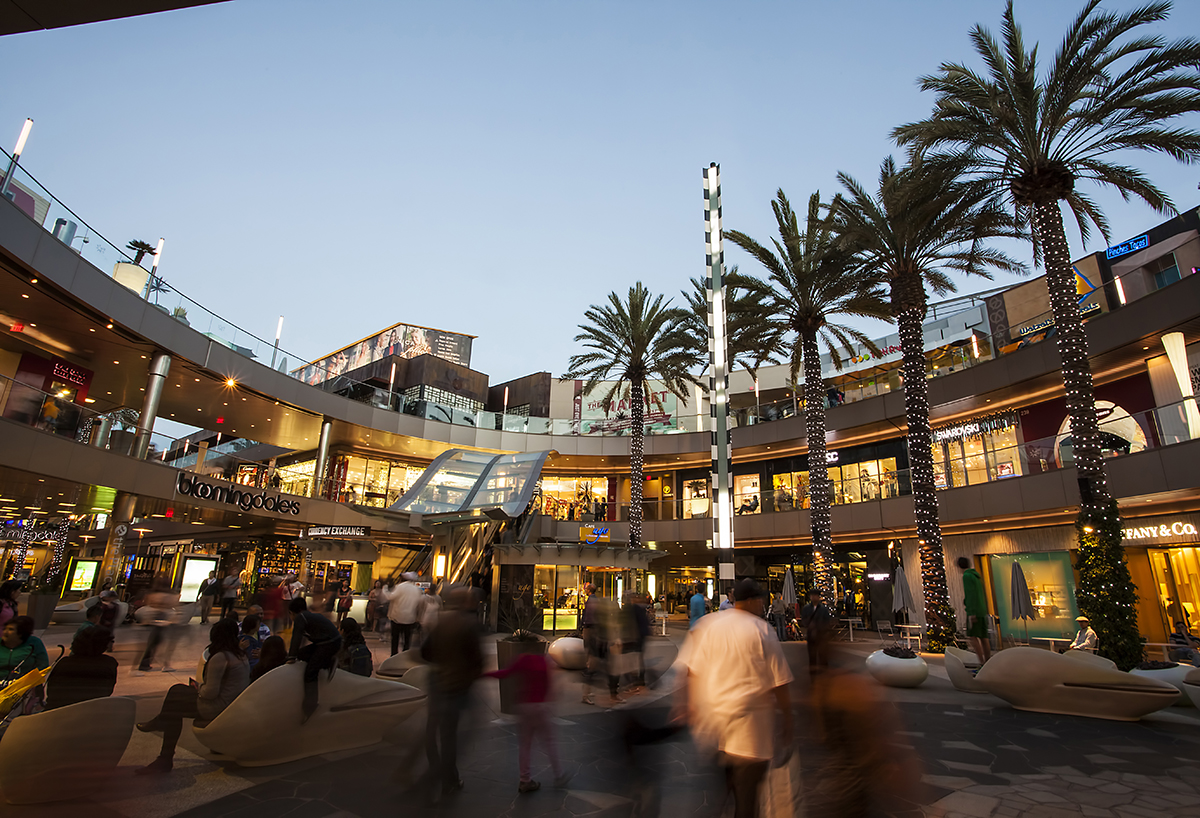
El centro comercial Santa Monica Place, que gracias a la sostenibilidad de su transformación ha recibido la certificación LEED. Foto: Macerich

Los centros compiten hoy por agasajar al cliente, proporcionándole una experiencia diferente, una atmósfera que más allá de una oferta comercial amplia, le ofrezca otros alicientes.

En esta búsqueda de experiencias, es interesante la estrategia del Santa Monica Place, un centro comercial diseñado por Frank Ghery hace más de 30 años, que después de invertir 265 millones de dólares y cerrar temporalmente, ha optado por reconfigurarse, demoliendo la cubierta y convirtiéndose en un centro/espacio comercial abierto con vistas al océano, las montañas de Santa Monica y el Santa Monica Pier. Un ejemplo magnífico de reconfiguración de un espacio comercial, que opta por una solución radical para crear una experiencia más urbana, frente a la atmósfera encapsulada y climatizada que predomina en la tipología clonada del shopping mall.

La experiencia “shopping mall” de Ecosistema Urbano

Gracias a un encargo profesional, hemos tenido la oportunidad de estudiar a fondo un centro comercial del área periférica de Barcelona. Este centro creado en los años 90, frente a los de carácter suburbano sólo accesibles en coche, es de carácter urbano; siendo accesible a pie o en transporte público, lo que le otorga un enorme valor añadido. La ubicación del mall es particularmente favorable, por lo que la propuesta tiene un fuerte carácter urbano, donde el reto principal ha sido la identificación de una estrategia de revitalización o cuestionamiento de su propia identidad, en relación con el tejido urbano que lo rodea: ¿Qué actividades o usos se pueden incorporar? ¿Cómo conectar con los ciudadanos del área? ¿Cómo dar respuesta a la realidad social del barrio? ¿Qué nuevo papel puede desempeñar este edificio? ¿Cómo mantener la actividad comercial y económica, permitiendo que la ciudad se apropie de este espacio en actual decadencia?


La propuesta aborda la reconfiguración del centro a través de la introducción de nuevos programas en un intento por convertirlo en un espacio mucho más público, siendo capaz de atraer a usuarios que de otra manera no acudirían. Frente a la opción de proponer un único programa que ‘resolviese’ las patologías actuales del centro, la propuesta estudia las alternativas posibles para dinamizar el edificio generando una nueva identidad para cada una de ellas, pudiendo distinguirse de otros centros comerciales, que como ya hemos mencionado, carecen de identidad distintiva.

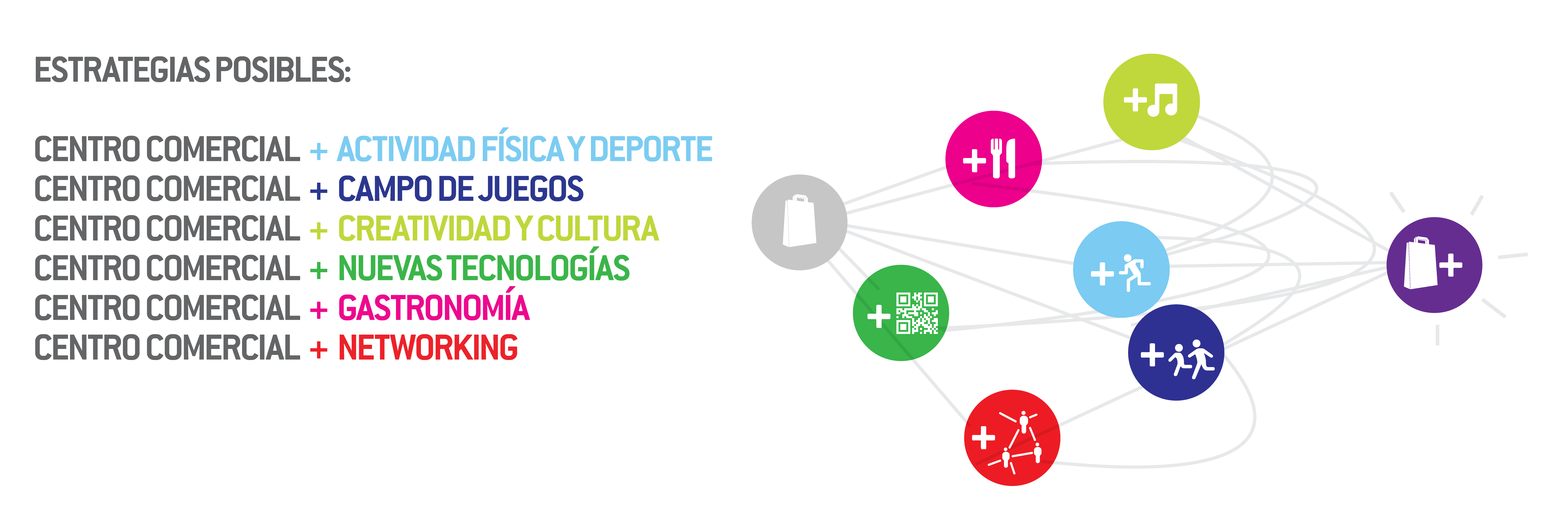
Una manera de reinventar nuevas funciones sociales en un gran espacio cubierto, es mediante la identificación  de diferentes temáticas y actividades, que teniendo conexión con el lugar, generan una nueva identidad, vinculada a nuevas necesidades o deseos. Establecer nuevas relaciones entre el espacio y el deporte, el juego, la cultura, la tecnología, la gastronomía, el networking …o cualquier otra actividad urbana, puede conectar con los ciudadanos que, cansados de experimentar un edificio monofuncional, se sienten atraídos por experiencias urbanas cada vez más complejas.

Una de las operaciones necesarias para lograr la mayor integración posible del centro comercial en su entorno urbano, es la de diluir los límites entre interior y exterior, favoreciendo que el uno entre en el otro, haciendo que el espacio cerrado sea más permeable, más conectado física y conceptualmente con su entorno inmediato. El límite físico de conexión entre ambos es la fachada y sobre ésta se focaliza una buena parte de la intervención. La fachada se convierte en ‘interfaz‘ de conexión con los ciudadanos, sirviendo como soporte para muchos tipos de nuevas actividades (escalar,  descender por un tobogán, ver cine, visualizar una plataforma digital con la que interactuar a través del móvil, incremetar la presencia de especies vegetales,…).

El modelo propuesto para el centro comercial en Barcelona podría ser un ejemplo de cómo estos edificios pueden convertirse en equipamientos públicos, de manera que, gracias a un enfoque que considera aspectos medioambientales, participativos y tecnológicos, se puedan actualizar lugares que han quedado obsoletos, anacrónicos o infrautilizados.

Estrategias

A // Centro Comercial + Actividad Física

Introducción de actividad física-deportiva en el espacio comercial.

– El deporte, la actividad física y el ocio como nuevo motor de reactivación del centro comercial.
– Actividades complementarias a los usos existentes, que pueden atraer a nuevos usuarios y tener un mayor radio de acción.


B // Centro Comercial + Campo de Juegos

Edificio para experimentar y descubrir.

– Programas asociados a los niños/adolescentes/adultos.
– Edificio como lugar a experimentar y descubrir.
– Promover el centro y el espacio público como lugar lúdico mediante elementos singulares.


C // Centro Comercial + Creatividad y Cultura

Actividades culturales y creativas asociadas al centro comercial

– Nuevos programas asociados a la creatividad como complemento a las actividades comunes de un centro comercial.
– Conexión con iniciativas existentes en la ciudad: grupos de música, aficionados, grupos de teatro, danza, circo, etc.
– Espacio vacío frente al edificio transformado como nueva ‘plaza’ urbana.


D  // Centro Comercial + Capa Digital

La dimensión digital incorporada como parte del edificio.

– Lo digital como una capa más, añadida a lo existente:
_ generar nuevas posibilidades de uso
_fomentar conexiones centro-usuarios y entre usuarios
_posibilitar nuevos modos de comunicación e información


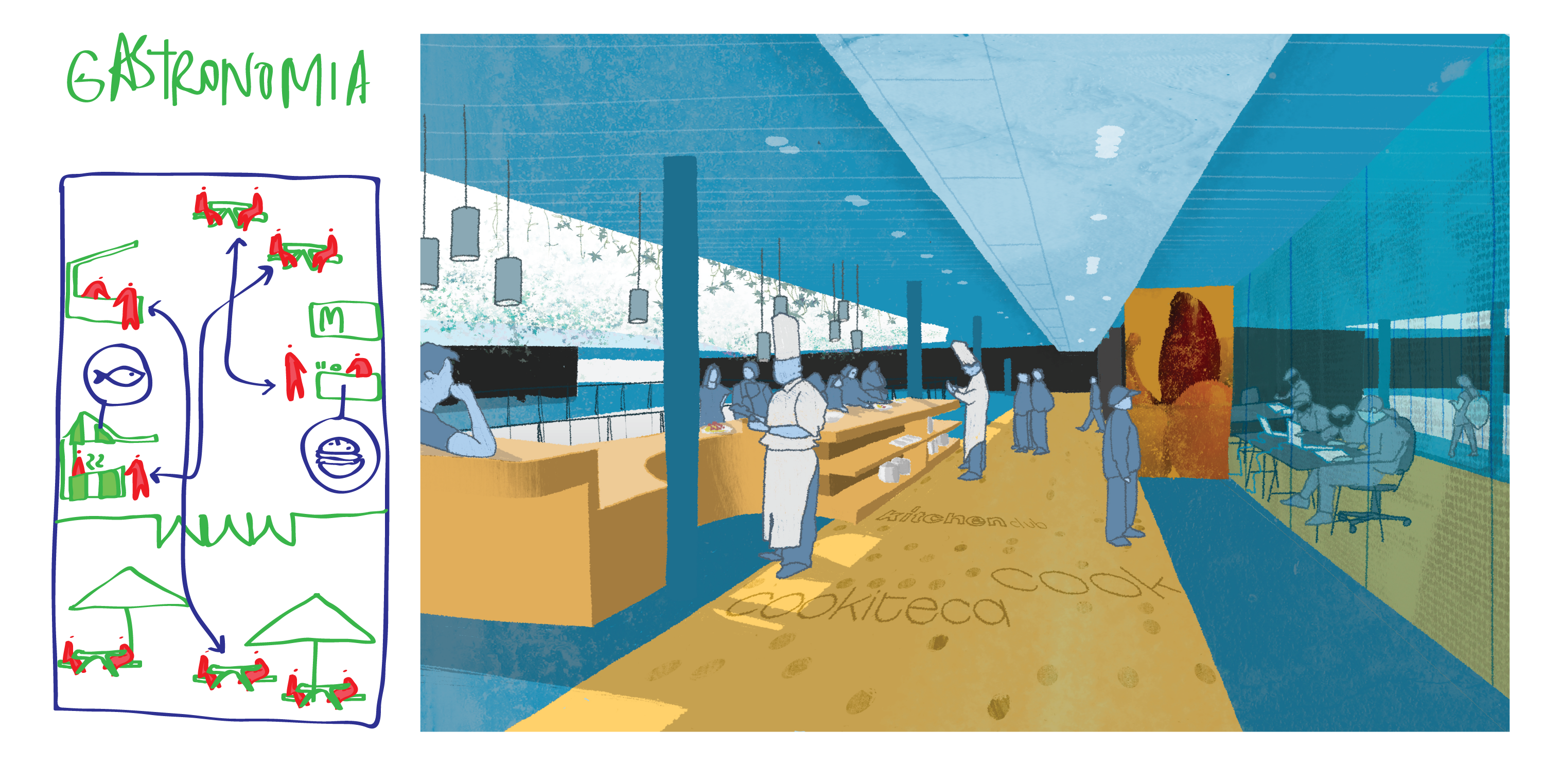
E // Centro Comercial + Gastronomía

La comida como catalizador social

– La comida como elemento de interacción social.
– Gastronomía como catalizador de encuentro intercultural.
– Actividades conectadas con la gastronomía: clases, encuentros, restaurantes, tiendas especializadas,…


F // Centro Comercial + Networking

Espacios que inducen a crear nuevas conexiones y generar iniciativas.

– Espacio de oportunidad para nuevas iniciativas, emprendedores, espacios compartidos.
– Nuevos modelos de gestión para acomodar usos y necesidades del entorno urbano, conectando con lo existente para potenciarlo.


Esperamos que estas propuestas sirvan de inspiración a los numerosos centros comerciales “sin identidad” que se encuentran en nuestras ciudades, y que deben explorar ideas y visiones más completas y estimulantes para adaptarse a la nueva realidad económica y responder de manera activa y creativa a las nuevas realidades sociales.

Comments: (0)

New workspaces, connecting the physical and digital spheres

Category: ⚐ EN+architecture+competitions+creativity+ecosistema urbano+research+technologies

ph+dg_654

During the past months, in the framework of a shortlisted competition for a new working+retail space in the Middle East, we developed a research about the possibilities of contemporary workspace and how the digital layer influences the physical configuration, enhancing and multiplying the possibilities.

Last Fall we were teaching at the Master in Workspace Design at IE University, leading the Technology Lab; so this exploration became a continuation of our previous research and work.

We have been studying the contemporary way of working / thinking / living, analyzing the current phenomena affecting the spaces where the working activities take place. We believe that the digital revolution and contemporary socio-political dynamics call for reflection on the way we work. Spaces and instruments for working, methods and hierarchies, places and distances have all been brought into question. Beyond and around working, there is an ongoing change of paradigm that involves almost every aspect of culture and society. The way we address and manage processes, products and knowledge is evolving aided by new technological possibilities and critical “meta” reflections: From competition to collaboration and cooperation; from centralization to P2P; from pyramidal structures to grassroots, horizontal ones; from professional secret to transparency; from private R&D to crowdsourcing; from intellectual property restrictions to copyleft and free/open source initiatives, from well finished products or services to open roadmaps that embrace perpetual beta…

Our research focused on the following challenges:

How can architectural, physical work space, aided by its digital equivalent through hybrid interfaces, incorporate those emerging ways in order to support further exploration?

How can we, architects/designers, provide the best built environment for these emerging impulses to become fully developed?

Our philosophical approach divided the subject into three main spheres of research:

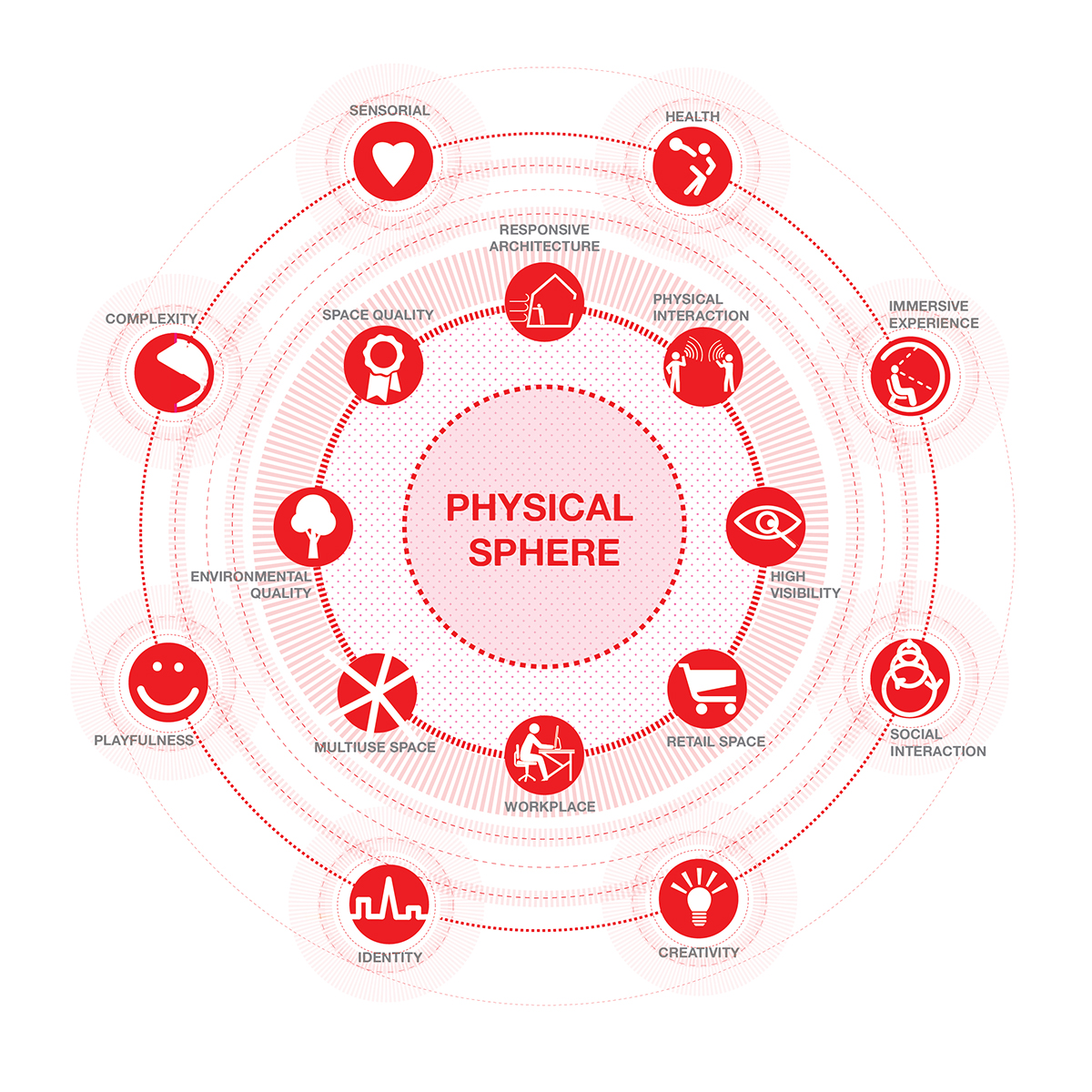
+ The Physical Sphere
Understanding the contemporary workspace as an innovative and experimental balance between design (size, material, color, behaviour, structure, relative position between elements,…) and conditioning (hygrothermal comfort, privacy, noise levels, lighting,…) to be implemented so as to be responsive and truly supportive.

Print

+ The Digital Sphere
We focused on the digital “cloud” associated to each space to enable experimental environments, unprecedented interactions and ways of communicating, or wider, faster, more open-access to knowledge. We considered the digital sphere in workspaces as a unique open environment, extremely user-friendly, flexible and customised according to the specific circumstances it will be used for: supporting internal work, influencing digital marketing strategies, involving customers and external visitors, instigating social activities.

Print

+ Physical-Digital Interaction
We design spaces that enable the best interaction between users relying on a physical comfort and the digital layer. We focus our work on how mutual management, communication, control, connection and interaction can work between the physical and the digital. This specifically involves physical interfaces that operate on the digital side and digital interfaces that influence the physical space.

DIAGRAMA workspaces-03

In order to achieve the integration of physical and digital spatial configuration, we developed a design strategy around four main actions we believe as relevant for an innovative workspace:

4 actions

– Inspiring
Innovation requires firstly an inspiring environment in order to provide an experimental incitement to creativity through different channels.
We believe in the possibility of feeding creativity through a series of activities that inspire our brain and stimulate it to go beyond boundaries and create big ideas.

– Well Being
A workspace should provide a high comfort level for the people using it. The environment should be equipped with all the facilities that ensure the best ambience for every particular situation and need.

– Challenging
Being satisfied by its own conditions, sometimes is not the best way to bring innovation. The only possibility to improve is going beyond and accepting challenges. In the contemporary work scene, innovation is an indisputable fact. But, for instance, how to stimulate a company that is already in the innovation sector to exceed and excel constantly? We believe that a good training in accepting new challenges even in the small everyday things could help a lot. Through simple dynamics that boost self confidence, cooperation between members of a team, enthusiasm towards the new and unknown and establishing an informal and playful way to invent new solutions for everyday issues as well as exceptional conditions is an excellent way of ensuring high levels of performance.

– Networking
We believe the strength of a successful company is in the quality of its structure and components, but just as important is the network that is able to create, expanding its connections and sharing an learning with/from others.

We keep this line of research open. So, if you want to contribute with it, by sharing a paper or article around the topic, we will be happy to publish it, to spread the ideas and inspire others!


Comment: (1)

Plan CHA: el making of de la maqueta | video

Category: ⚐ ES+arquitectura+ciudad+comunicación+ecosistema urbano+espacio público+eventos+noticias+Plan CHA+urbanismo

gif

Hoy os presentamos el vídeo del making of de la gran maqueta del Centro Histórico de Asunción realizada en ocasión de la Exposición sobre el Plan CHA inaugurada el pasado jueves 14 de mayo de 2015, que os contábamos en un post anterior.  La maqueta ha sido realizada por un equipo de arquitectos y estudiantes consolidado a partir del taller #labCHA, y en particular por Jacqueline Jaquet, Daniel Barrientos, Aldo López, Cristian Carísimo, Laura Alejandra Colmán y Oscar Amarilla. ¡Un gran trabajo, literalmente hablando!

El vídeo ha sido grabado por Cristian “Gurú” Nuñez y editado por “Estiven”, ambos parte de la comunidad local que ha dado nacimiento a la primera escuela de cine de La Chacarita, donde jóvenes del barrio pueden acceder a una educación de nivel profesional en temas audiovisuales. ¡Uno de los proyectos piloto que se hacen realidad desde ya!

Comments: (0)

Archiprix International – ecosistema urbano takes part in the Awards ceremony

Category: ⚐ EN+architecture+creativity+ecosistema urbano+events+urban social design+urbanism

archiprix_madrid2015-960x576

In the past two weeks, Madrid has been the capital of the most innovative and vibrant ideas coming from the academic environment worldwide. In fact, Madrid was chosen for the 2015 edition of Archiprix International, a biennial event that involves all schools worldwide in Architecture, Urban Design and Landscape Architecture to select their best graduation project.

The event consisted of two sections:

Towards a middle-out urbanism

All participants were invited to participate in the Archiprix International workshop, that took place at ETSAM. These best graduates from around the world form a unique group of young talented designers. From surgical interventions to visionary statements: the best graduates from all over the world were invited to Madrid and challenged to develop plans and design proposals in a multidirectional approach to the city. The workshop was conducted by DPA-ETSAM and Los Bandidos AG and tasks were led by emerging local practices.

facts

We were invited to be part of the jury to evaluate the projects resulted from the 7-day workshops and to present our overview and conclusions about this work during the final Award Ceremony that took place at Cine Callao on Friday May 8th.

16891768904_d76e02e80e_o

In our talk we reflected on the topics that emerged throughout the different proposals and groups. In addition to this, we presented our vision of how designers and architects need to equipe themselves to be able to deal with contemporary urban issues, what we understand is the new designer’s role and the importance of incorporating new tools in architecture.

16894228313_1e2b89d780_o

Belinda Tato talking about the variety of topics related to architecture

17326816098_4c8c7693d6_o

Jose Luis Vallejo explaining the concept of “one-man band” in architecture

17512386842_5025feb3be_o

Iñigo Cornago talking about the importance of bottom up actions

gif-4-projects

Four projects from the Archiprix workshops

Archiprix International Madrid 2015

Extensive presentation of the world’s best graduation projects, selected by 351 schools from 87 countries.

map

Map of participants in Archiprix 2015

The jury comprised Eduardo Arroyo, Luis Fernández-Galiano, architect and editor of Arquitectura Viva, Anupama Kundoo, architect with her own practice in Auroville (India) since 1990; Zhenyu Li; and French landscape architect Catherine Mosbach. The jury reviewed all submitted entries at the ETSAM | UPM – Escuela Técnica Superior de Arquitectura de Madrid, Universidad Politécnica de Madrid, the co-organizer of the eighth edition of Archiprix International. The jury nominated 21 projects for the Hunter Douglas Awards and selected 7 winners out of these nominees.

winners

Winners of Archiprix International

Here you can have a look at all the selected projects and the seven winning projects.

The 9th edition of Archiprix International -2017- will be held in Ahmedabad, India.

It has been a great pleasure to be part of this inspiring event and getting a chance to see and hear how the most talented architects are thinking throughout the world.

We wish all of them the best luck for their brand new careers!

More info about Archiprix 

Comments: (0)

Chatter: Architecture Talks Back, Exhibition at the Chicago Art Institute

Category: ⚐ EN+design+dreamhamar+ecosistema urbano+events+news+technologies

Chatter_Expowering_04_david_schalliol

Photo: David Schalliol

Last February we were invited by the Art Institute of Chicago, the second largest museum of United States after the Metropolitan Museum of Art, to participate in the exhibition Chatter: Architecture Talks Back, an exhibition curated by Karen Kice and Iker Gil. The exhibition explores the new possibilities that technology offers to communication in architecture, aiming to establish an ideal dialogue between architecture’s present and past. The thesis of the exhibition is that Chatter is the new way for architects to communicate their ideas; social media as Twitter and Instagram are nowadays working tools for architects to produce and present their work. The exhibition focuses on the creative process of some international architectural firms, such as: Bureau Spectacular, Erin Besler, Fake Industries Architectural Agonism, Formlessfinder, and John Szot Studio; and highlights how they conceive new designs and ideas that reflect upon and expand the legacy of their field.

Chatter-Architecture-Talks-Back_480

Cartoonish Metropolis, 2011. © Bureau Spectacular.

In this framework we were invited to exhibit our project Dreamhamar in the Gallery 283, in the section curated by Iker Gil, Director of the design publication Mas Context. In this part of the exhibition, that explores the multiple ways in which architecture can be communicated, our work represented the section “Empowering”, one of the concepts used to support the thesis of this section, together with others as “Challenging”, “Satirical”, “Collective”, “Revealing” and “Diagnostic“.
Chatter_Overall_01_david_schalliol

Photo: David Schalliol


Chatter_Expowering_01_david_schalliol

Photo: David Schalliol

The projects presented in this space were produced by a range of practitioners worldwide: Ecosistema Urbano; over, under and pinkcomma; Mimi Zeiger and Neil Donnelly with the School of Visual Arts Summer Design Writing and Research Intensive; Koldo Lus Arana (Klaus); Project_ with Sarah Hirschman; 300.000km/s with Àrea Metropolitana de Barcelona; Luis Úrculo; and Christopher Baker.

collage

Photo: David Schalliol


twitter installation

Photo: David Schalliol

If you are planning to go to Chicago, don’t miss it! It will be open from April 11th, 2015, through July 12th, 2015 in the Architecture and Design galleries in the museum’s Modern Wing.

Comments: (0)

Networked Urbanism – Ecosistema Urbano workshop at Hong Kong Design Institute

Category: ⚐ EN+city+creativity+ecosistema urbano+networkedurbanism+social software

10958296_1056673877683503_5161312059683376810_n

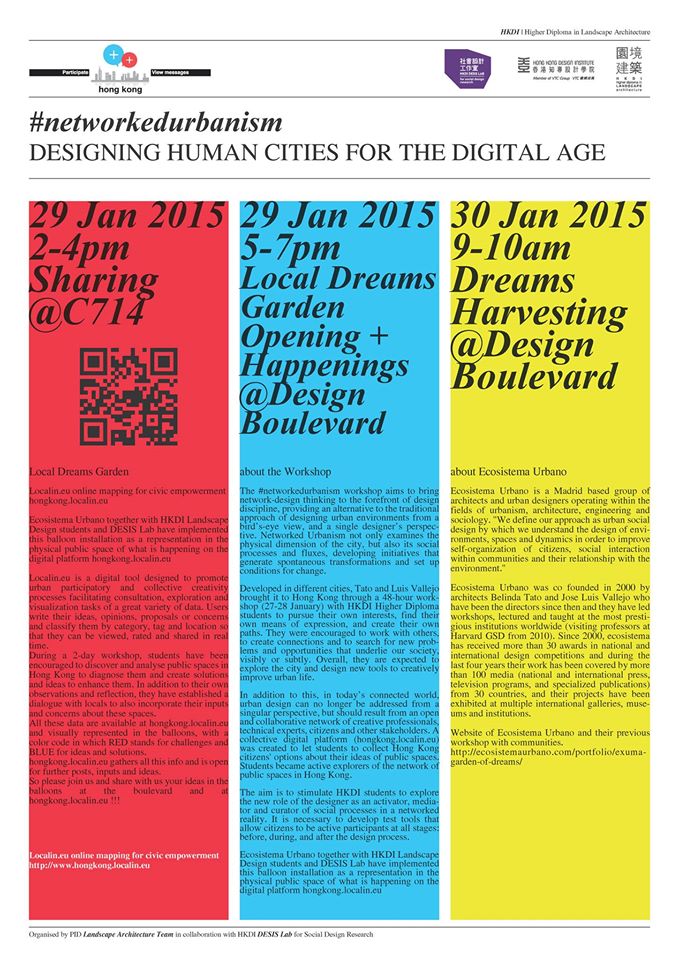
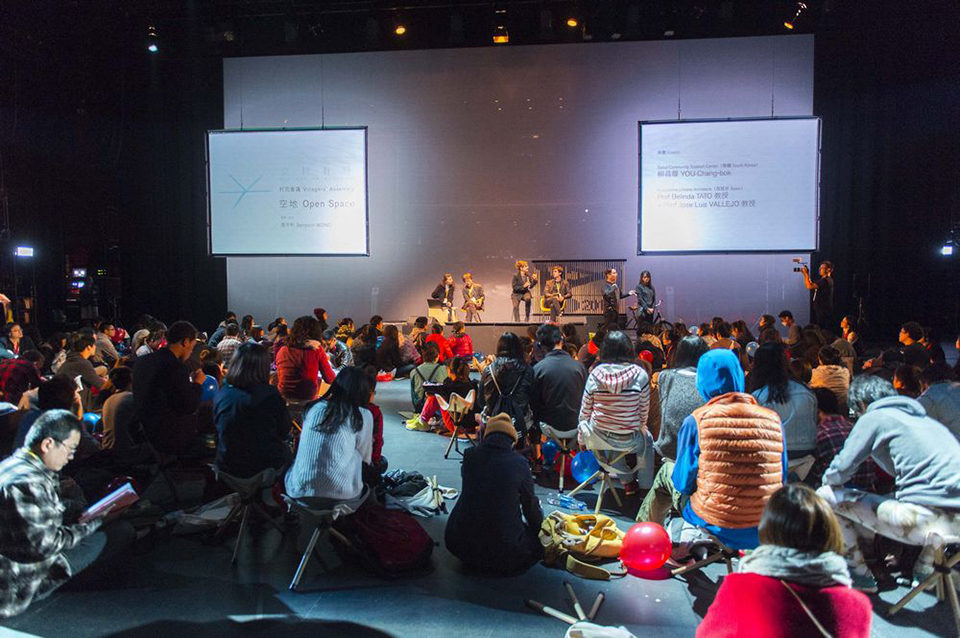
Last January Ecosistema Urbano was invited to Hong Kong to take part in activities at two different events. We were invited to give a lecture and run a workshop at Hong Kong Design Institute and also be part of the MaD ASIA FORUM 2015 program.

Hong Kong Design Institute is an educational institution that adopts a “Think and Do” approach through contemporary curriculum and active collaborations with industry. HKDI brings together the strengths of the Design departments and offers programmes spanning across Foundation Studies, Communication Design and Digital Media, Fashion and Image Design, and Product and Interior Design.

1_ HKDI

Our workshop aimed, not only at examining the physical dimension of the city, but also its social processes and fluxes, focusing in the quality of HK public spaces.

We believe that the reactivation of a public space cannot be addressed only by a conventional piece of art or urban design. A lively public space is a complex balance of overlapping layers which should also allow for improvisation and interaction; it is the platform for conversation and socialization and it should respond to the demands, desires and expectations of an increasingly plural society.

The transformation of a public space is not only about physically implementing a new creative urban environment, but also, and far more important, it is about building a community to support it, to care for it, to use it – before, during, and after its materialization. A designer’s role is not only to deliver high quality public spaces, but also to reflect on the many ways public space can contribute to foster or discourage social interaction. It is interesting to understand how the physical configuration of a space can condition our personal and social behaviour.

At ecosistema urbano we believe we have to work at different levels in order to achieve a healthy and sustainable public space. Our methodology focuses on three key factors:

Society. We believe it is necessary to empower communities to drive the projects that affect them, and therefore involve social layer in the design process, so social relevance can be guaranteed. It is necessary to invite citizens to take an active role in urban transformation.

Technology. We embrace technology as a means to enhance citizens’ interaction with each other and with the environment around them. As the digital-physical divide narrows and the possibilities multiply, technology becomes an increasingly significant element in urban social life.

Environment. Sustainability is not only an option anymore, but a must. Our work promotes the comprehension of the city as an open environmental classroom to raise awareness about ecological issues among citizens.

Within this framework, Jose Luis Vallejo and I led a 3-day workshop at Hong Kong Design Institute with students from the landscape program. The purpose of the workshop was to encourage students to reflect on the public space surrounding the school.

10955686_522751844532711_7015857717189480662_o

The workshop consisted of three different actions:

FIRST ACTION

During the first task students had to explore the area, identifying both challenges and opportunities in the public space of this part of the city: East Kowloon, a newly built area with a lack of attractive public spaces. They had not only to observe and experience the space themselves but also to gather inputs and fresh ideas from other users and passersby.
In order to communicate and express their learnings and findings, they were expected to elaborate their ideas by producing a video.

WORKSHOP 2

Today’s strong culture in the use of new media pushes us, designers, to find innovative ways of communicating our ideas beyond the conventional disciplinary tools. The easiness of spreading information through social media, reaching out a larger audience, presents new opportunities of raising awareness about urban issues, increasing social interest, and building up a stronger urban culture.

The definition and the testing of these tools is a fertile creative space where students and future designers can find new opportunities for development and innovation, where not only the very concept is important, but also the skills of storytelling and narration.

We believe Design Schools should explore these new ways of communicating and transferring ideas and knowledge to bridge the distances between disciplinary language and society’s interests. It is necessary to develop the appropriate tools and to establish a creative and efficient conversation between us, designers, and the citizens, as we no longer can think about creating a healthy and sustainable city without their engagement.

Many topics emerged from this explorative approach: the space for the visually impaired, the lack of activities and programs, the monotony of the current design and existing solutions, etc.

You can watch the videos produced here.


SECOND ACTION

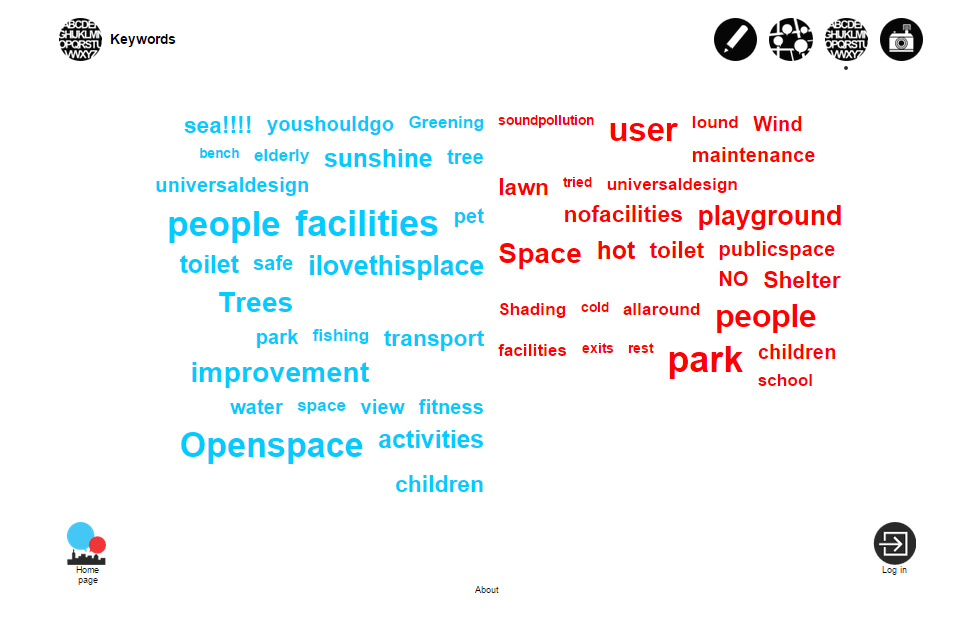
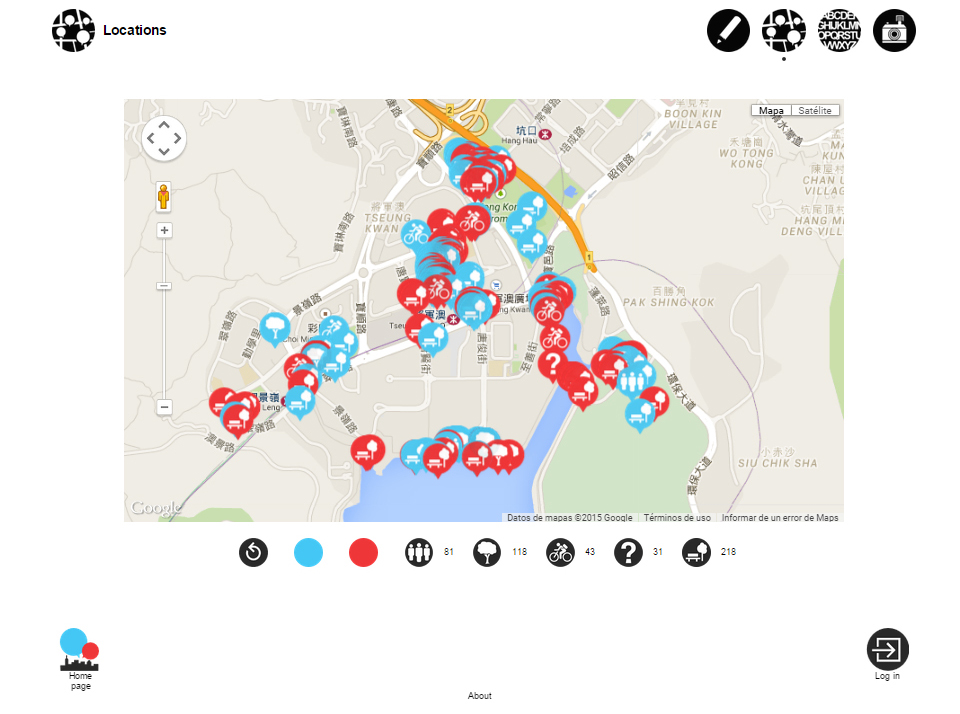
The second purpose of the workshop was to launch the Hong Kong version of the local_in platform, an online platform designed to publish geolocated messages: users write their ideas, opinions, proposals or concerns in 140 characters and classify them by category, tags and location so that they can be viewed, rated and shared in real time.

gif-intro

The digital platform enables users to work at two different levels:

Mapping: situations, problems, opportunities through images, video, descriptions, etc.
Getting into action: posting their designs, strategies, and solutions to reactivate and dynamize the existing spaces.

There is a color code in which RED stands for problems or challenges and BLUE for ideas and solutions.

map 1
map 2
map 3

The interface is very intuitive and allows the user to visualize the information by topics and interests in any given area of the city. Students directly uploaded their findings and reflections to the online platform. The application is open source, designed and developed by Ecosistema Urbano and released under GNU GPL license.

The platform hongkong.localin.eu will remain online and open for further use by citizens.


THIRD ACTION

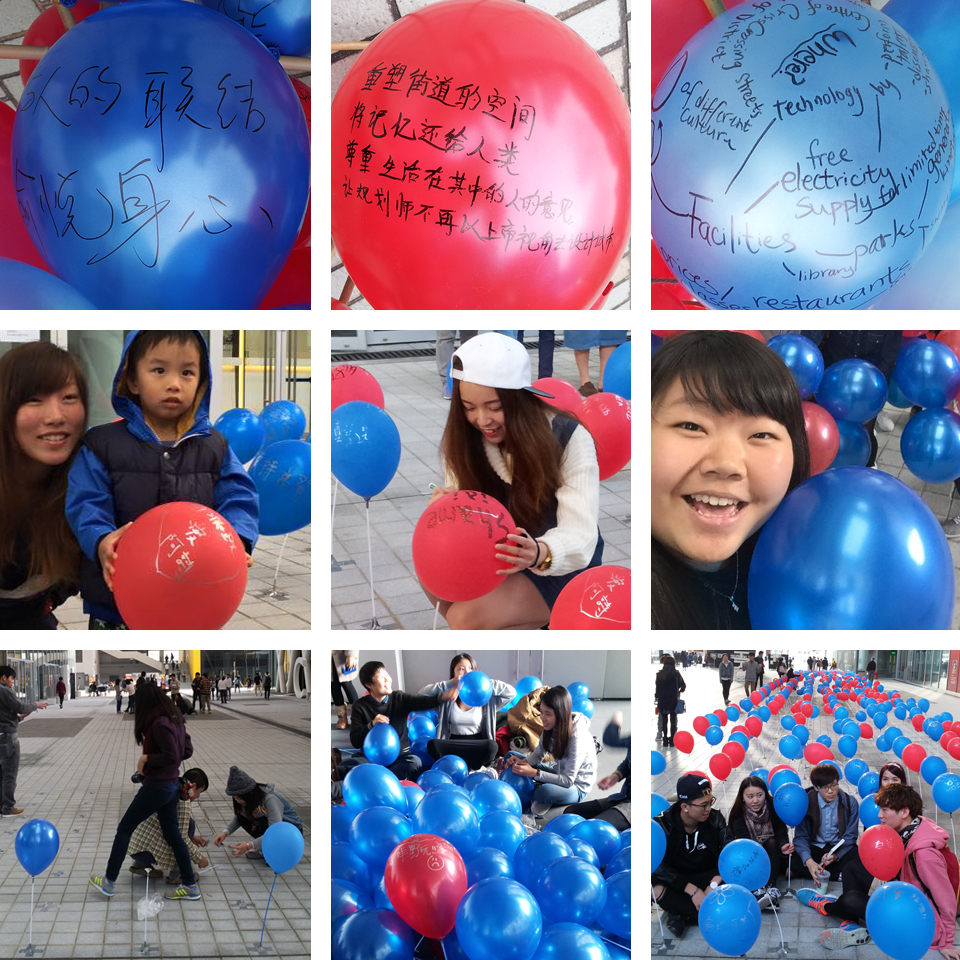
As a final and symbolic act representing the result of this reflection, a temporary balloon installation was implemented in the main public space at HKDI, the boulevar.

inflar-2

A series of 500 balloons were put into place, red balloons standing for problems and blue for ideas, recalling the color classification used in the local_in platform.
The installation is a symbolic representation of the digital platform and the ideas shown were a selection of the many gathered by students during the neighbourhood exploration. The ideas written in the balloons drew the attention of other students and passersby, and many of them also became engaged in the process and decided to contribute with their own thoughts. This simple mechanism became a social catalyst, sparking conversations along the space, connecting people and encouraging the reflection about the space we live in, and finally also the ideal background for many selfies, instantly shared on the social networks.

MATRIZ

HDKI-arriba-SMALL


MaD ASIA FORUM 2015

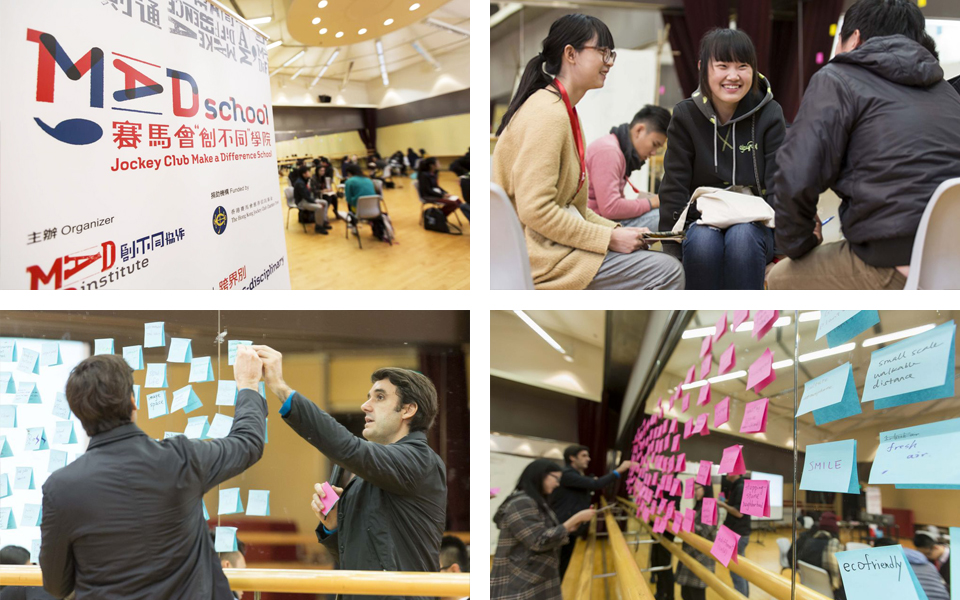
In addition to this activity we also took part in the MaD ASIA FORUM 2015, a platform cultivating creativity and global vision among young people in Asia.

Founded in 2009, MaD (Make a Difference) inspires and empowers young people all over Asia to come up with creative responses to our time’s challenges. It has evolved as a collaborative platform of creative changemakers that works at the intersection of creativity, entrepreneurship, innovation and discovery to bring about positive changes in Asia.

MAD

_DSC0375

Jose Luis and I gave a lecture within the program and led two workshops titled “Designing Human Cities for the Digital Age” in which participants were challenged to interact and collectively think about ways of improving cities.

WORKSHOP MAD

stickers

Here you can find an interview (in chinese) published in NHET magazine.

Comments: (0)

Guillermo Aroca | eu collaborators

Category: ⚐ EN+colaboradores+ecosistema urbano+Uncategorized

Dear all! Today we introduce Guillermo Aroca, a young architect who is collaborating with us from September 2014. He is bringing a critical fresh view of urbanism and architecture. A sharp observer who gives the perfect touch to our reports. Below, in his own words:


10267780_810715348951698_2382419633422197673_n

I was born in Madrid in 1989 and I have always had a special interest for design, society and politics. I developed my passion for politics through my participation in the Model European Parliament (MEP), a debate program organized by the European Union.

I have learned architecture at the Architecture School of Valladolid and I have studied the fifth year of my career at the University of Technology and Economics of Budapest (BME). I have presented a selection of freehand drawings, photographs and collages that I have made during my career to the Association of Architects of this city (FUGA).

I began to practice as an architect at the architecture firms M57 and ODImasP, the former is based in Granada and the latter in Valladolid. I have also worked in the gallery of contemporary art Álvaro Alcázar, where I got in touch with the most active professionals in the Spanish creative scene.

In 2013, after volunteering in a Spanish NGO and submerging myself into the Spanish crisis, I conducted a final thesis project of a social nature, with the desire to serve the most disadvantaged part of the population.

During my stay in Ecosistema Urbano, I have developed an interest for urban social planning with citizen collaboration. These past months I have focused in the execution of a Master Plan for Asunción (Paraguay), I have also been working in the preliminary phase of the development of a Master Plan for Encarnacion (Paraguay) and a group working space in Barcelona. This commission has allowed me to mentally travel to South America without moving from my own city. Apart from learning how to trace a Master Plan full of content and without losing any attention to its design and appearance, I have also enjoyed an extraordinary work environment, full of great energy and fellowship.

In the future I look forward to further developing my passion for architecture, fashion, photography and writing. I have been able to cultivate these interests through various collaborations in many magazines, such as Curador, Doze and Metal Magazine.

More information at:
 (C:\Users\hp\Desktop\PFC\6. MARZO\L301MINA 0\L01_CONCEPT

Comments: (0)

Ecosistema Urbano at MaD Asia forum 2015

Category: ⚐ EN+ecosistema urbano+events+news

mad_620

Next week Ecosistema Urbano members Jose Luis Vallejo and Belinda Tato will be attending the MaD ASIA FORUM 2015, a platform cultivating creativity and global vision among young people in Asia.

Founded in 2009, MaD (Make a Difference) inspires and empowers young people all over Asia to come up with creative responses to our time’s challenges. It has evolved as a collaborative platform of creative changemakers that works at the intersection of creativity, entrepreneurship, innovation and discovery to bring about positive changes in Asia.

Tato & Vallejo will be running the #networkedurbanism workshop “Designing Human Cities for the Digital Age” on Jan. 31st and presenting their work on Feb. 1st.

We are excited to be back in Hong Kong and looking forward to knowing more about the city and its creative community!

More about the event 
The schedule 

Comments: (0)

Feliz / Happy / Bonne année / Ευτυχισμένο / Felice / Счастливого 2015

Category: ⚐ ES+ecosistema urbano

feliz_2015_620

ecosistema urbano os desea lo mejor en este año que comienza.

Tras un final de 2014 muy intenso con el equipo extendido entre varios continentes, nos encontramos todos reunidos de nuevo en Madrid, coordinándonos y avanzando en el desafío que es trabajar con distintos idiomas, diferentes culturas y diferentes circunstancias locales en cada proyecto.

2015 nos trae la continuación de los proyectos que tenemos en marcha y varias oportunidades de comenzar otros nuevos e igualmente ilusionantes en otras partes del mundo. Esperamos con ganas cada ocasión de seguir colaborando con muchos de vosotros durante los próximos meses.

¡Feliz 2015! Happy 2015! Bonne année 2015! Ευτυχισμένο 2015! Felice 2015! Счастливого 2015!