


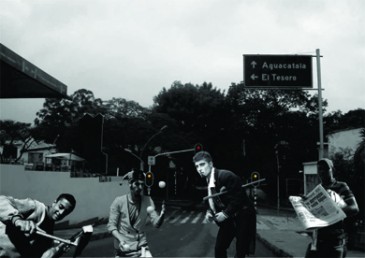
Jose Luis Vallejo and Belinda Tato have been tutors of one of the thesis projects group at the IAAC last June. There were 16 different students from many different countries such as Russia, Poland, Colombia, Turkey, India and so on. It has been very interesting and exciting to work with architects with such different backgrounds. The topics were chosen by them and there is a whole range of different ones from a very small scale to a large one.
We will be presenting some of these thesis works in the following weeks. Today we present the work by Rodrigo Toledo, an architect from Medellín, Colombia. His proposal is for his home city Medellín and he deals with the economic and social issues related to public space scene. continue reading
⚐ EN
August 21, 2009
July 28, 2009

A group of architects, engineers and constructors have started to think (and design) how to refurbish the Empire State into a modern and sustainable building. The initiative is led by a special person, Amory Lovins, co-founder of the “Rocky Mountain Institute” in 1982. continue reading
July 27, 2009
“Now, the first thing we need to recognize is that this is not just a time of challenge for America’s cities; it’s also a time of great change. Even as we’ve seen many of our central cities continuing to grow in recent years, we’ve seen their suburbs and exurbs grow roughly twice as fast — that spreads homes and jobs and businesses to a broader geographic area. And this transformation is creating new pressures and problems”.
“So what’s needed now is a new, imaginative, bold vision tailored to this reality that brings opportunity to every corner of our growing metropolitan areas” (Obama) continue reading
July 19, 2009
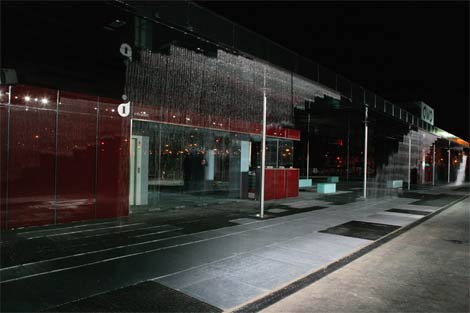
This post is totally from the “city of sound” written by Dan Hill
I’ve just finished working with Carlo Ratti and various cohorts on a great little project, which I hope might see the light of day here before too long. In the meantime, I thought I’d post this discussion I had with Carlo late last year, which was recently published in Architectural Review Australia. We met at the Metropolis Congress in Sydney, where Signor Ratti had just given a presentation on his work at the MIT SENSEable City Lab, an outfit whose work I admire hugely, working as they do across many of my interests: interactive architecture, urban informatics, responsive envronments, multidisciplinary design and other implications of real-time networked pervasive information systems for the city. continue reading
July 8, 2009
Yes, we camp!
Category: ⚐ EN+architecture+creativity

L’Aquila – Italy, earthquake
Yes, we camp! It’s the cry to denounce the crazy conduct of the after earthquake emergency.
For the first time in the recent history of earthquakes, after three months, people are still living under tents and they will have to stay there for a long time, according to the Government’s plans. continue reading
July 7, 2009
Well, it’s time to make notes on that brilliant traffic-calming idea. The Intelligence Transportation Society of America (ITSA) kicked off a $50,000 “Congestion Challenge” today that seeks to pair social networking with innovative transportation policy-making. continue reading
July 5, 2009
The Clinton Climate Initiative, from the William J. Clinton Foundation, has decided to promote 16 good practices in sustainable urban growth. Everybody is making list, as Forbes, but they don’t present very well the meaning of thist list. Through the website, we can see that the Initiative push the urban regeneration and the improvement of green energy as goals to reach better cities and better life’s. From this first post, our aim is communicate information about those projects, receive comments from our community and in two weeks offer a critical overview and some strategic keys to understand why some of the presented projects are in this list, and why some have no reasons. I hope we will generate some group of discussion on the present of our cities and some positive criticism on the ways to improve them.
continue reading
July 4, 2009

A few weeks ago we attended the opening of the exhibition “Green Architecture for the Future” at the Louisiana Museum of Modern Art, an institution which is working since the fifties in Humlebaek (a charming town half an hour by train from Copenhagen) . This museum was a pioneer in its time to set off in a rural setting and maintain its activity for over half a century. We recommend a visit (at least virtual) if you have the chance, because the landscape and its relationship with the architecture of the museum is probably something to remember. continue reading
June 30, 2009

This is our last daily playlist at the office, from now on we’ll post weekly or monthly playlists, so the first music brain-storming ends up here… the bright side is that weekly or monthly playlists are smoother and rested, and we have more time to select tracks for everyday work…
spotify:user:eiza1980:playlist:0iZq0jYXYYnqCggogvts9w
June 26, 2009
The European Urban Knowledge Network has published an interview with Belinda Tato (Ecosistema Urbano):
Many people, organisations and governmental bodies would agree that cities play an important role in reducing the negative effects of climate change. In the past few years, this role has been actively debated at conferences, summits and informal meetings. Some organisations have a very clear and progressive image of what cities can do to tackle climate change related issues and strongly believe in large-scale transformations. An example of such an organisation would be ‘Ecosistema Urbano’, a Madrid-based architectural research and design institute that is strongly committed towards ecology and sustainability. Belinda Tato, architect at Ecosistema Urbano, believes that far more can be done to make cities more sustainable. “In the last few decades cities have grown considerably, but nothing has been done to explore new urban models to improve their efficiency, especially in relation to the management of resources.” According to Ecosistema Urbano, the ideal sustainable city can become a reality if more creative and holistic solutions are sought. continue reading