Array

Comments: (0)

Open Data Handbook 1.0

Category: findings+⚐ EN

Last February the Open Knowledge Foundation presented the version 1.0 of the Open Data Handbook, a guide that explains the basic concepts of open data, especially in relation to government.

Open Data Handbook

It covers how open data creates value and can have a positive impact in many different areas. In addition to exploring the background, the handbook also provides concrete information on how to produce open data.

As the introduction explains:

Do you know exactly how much of your tax money is spent on street lights or on cancer research? What is the shortest, safest and most scenic bicycle route from your home to your work? And what is in the air that you breathe along the way? Where in your region will you find the best job opportunities and the highest number of fruit trees per capita? When can you influence decisions about topics you deeply care about, and whom should you talk to?

New technologies now make it possible to build the services to answer these questions automatically. Much of the data you would need to answer these questions is generated by public bodies. However, often the data required is not yet available in a form which is easy to use. This book is about how to unlock the potential of official and other information to enable new services, to improve the lives of citizens and to make government and society work better.

The original version of the book, called “Open Data Manual”, was written during a book sprint in Berlin in October 2010. Since then, a wide group of editors and contributors have added to and refined the original material, to create the Handbook you see today. Just click the image below and read it online:

Open Data Handbook - ver online

The vision is to create a growing series of open-source Handbooks and Guides that would offer advice on different aspects of open data. This project has already been started, being available so far:

Do you find it useful and want to see it further improved? Then you could consider becoming a part of the project and contributing to its development. The project now lives as a self-contained project within the foundation, its community being mainly centred around the open-data-handbook mailing list. It is primarily supported by the open government data and the EU open data working groups, and of course you can join in and add your bit.

There are many ways you can contribute:

  • Would you like to have it in your language? Help translating it! They are using Transifex to manage translations; see the instructions on their wiki for information about how to get started.
  • You can point out corrections and suggestions for improvement on the issue tracker or by emailing opendatahandbook[@]ofkn.org.
  • You can contribute to the next version of the Open Data Handbook:  join the mailing list and share your ideas!
  • A country specific adaptation could be also a great addition you could work on.
  • Donate! The OKF is committed to keeping the Open Data Handbook entirely free, and all contributions to make this possible are gratefully received.

Source: OpenSource.com
Front page image: digiphile + cactusbeetroot

Comments: (0)

House of Steel and Wood | a model from across the ocean

Category: findings+⚐ EN

Sometimes the Internet brings us great surprises. We’ve been recently contacted by some students from the U.S. (Bernabe Longoria, from the University of Texas at Arlington, U.T.A. and Fabiola Miria, Brigid Hardiman and Shih-hsun Lin, from New York Institute of Technology) regarding the same project: the House of Steel and Wood in Ranón.
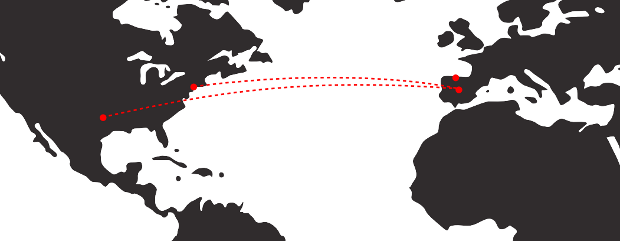
Across the ocean

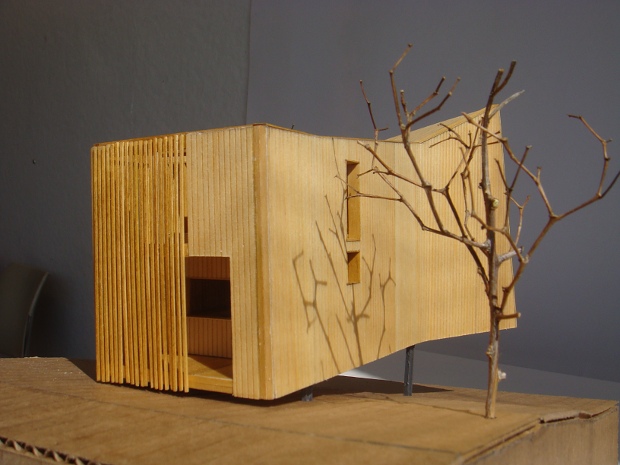
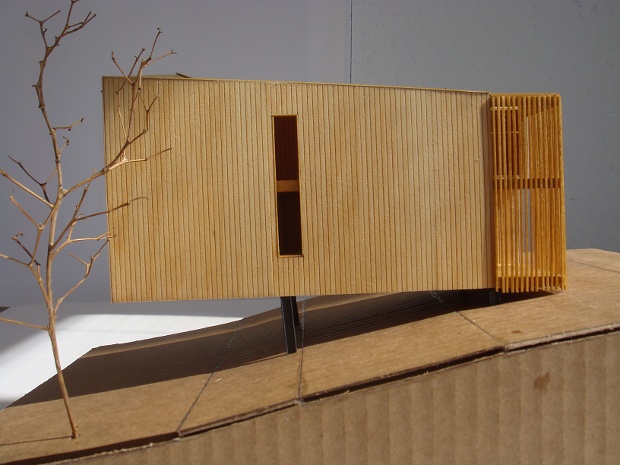
As there isn’t much information about this building around the net (in fact I just realized it isn’t even published here), they asked us to send them the plans. The surprise came when, some weeks later, Bernabe contacted us back and sent us some photos of a nice scale model he had made using that technical information. Here you can see them:
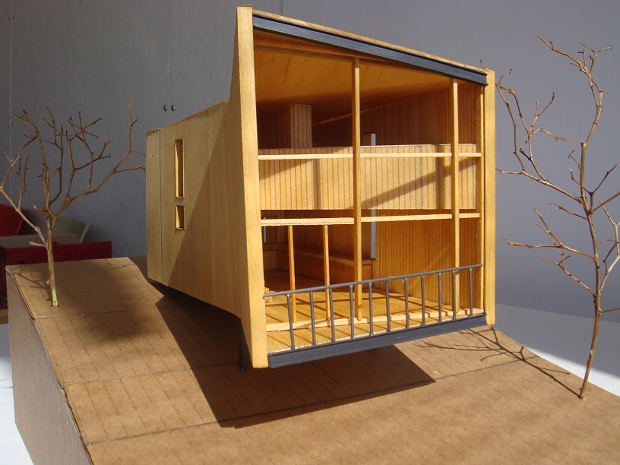
Vista 1

Vista 2

Vista 3

Nice, isn’t it? It’s even more detailed than Ecosistema’s own models! And Bernabe also wrote us some words:

Dear Ecosistema Urbano,
My name is Bernabe Josue Longoria and I am a student at the University of Texas at Arlington [also, he tells us he was born February 8, 1990, raised in the small town of Cleburne, Texas]. This is currently the beginning of my junior year in the architecture program and the first assignment given to us was to study a small, residential, prefabricated house of our choosing. After spending a few days going through books in our library and houses online, I finally stumbled upon the House of Steel and Wood.
The organic simplicity of this design was what impacted me most, along with the spaces themselves. Nothing interrupts them, which allows anyone to not only enjoy the company of their own family and friends, but the beautiful surroundings in the area.
Being from Texas, everything must be expensive, everything must be better than “that design”, above all, everything must be bigger. As a student the fame, fortune, and idea of my name becoming a generic stamp on a building has never been something important to me. What I aim for in this career is clearly what this house displayed; to impact the world itself without leaving a mark. I find it very interesting that you are able to design with not only a limited amount of space but materials as well. I have never been taught to design at this scale or style, so this was a whole new experience for me seeing as how The House of Steel and Wood was my first precedence of this type of architecture. I hope to pull from this experience the concept of making a feasible, discrete, and sustainable designs for the earth and by the earth; therefore offering a design to the world without taking away from its natural beauty.
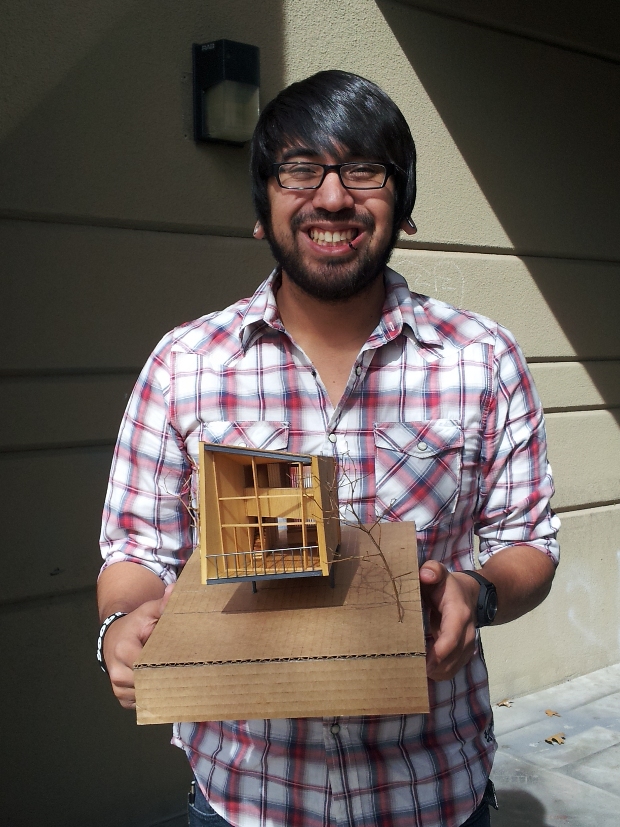
Bernabe with his model

Many thanks to Bernabe for sharing his work with us! And there’s even more: Fabiola, Brigid and Shih-hsun are right now working on a BIM model of the same house; here at the office we are all eager to see the result.

This kind of interactions make us even more aware of the importance of sharing information about each one’s projects and creations. Right now, everyone can already download the Air Tree project or, just for fun, get the CAD files for EU Comics, but there is still a long long way to go: could we publish every project the same way?

Comments: (0)

[EU] spotify playlists #5

Category: eu:live+findings+internet+⚐ EN

spotifyeu_logo3

…and now we start with our weekly homemade playlists…

spotify:user:eiza1980:playlist:6G2Z28SrMPugyE2azJ0zDL

Comments: (0)

[Recycling urban infrastructures] High Line Park NYC

Category: design+findings+proyectos+r[eu]cycling+urbanism+⚐ EN

highline park11

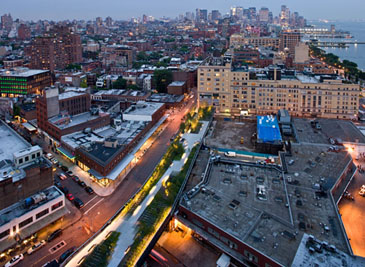
It’s a rare day indeed when we see [specially in urban scale] a brave project that amazes all of us, and I think this is one of those…
Apart from the “cool” new-yorker look, is some kind of relief that one of many awesome urban-scale proposals has been carried out. It had to happen in New York and lead the way in the U.S. of recycling and not demolishing when a construction stops being in use or is not profitable anymore. I suppose this frecuent situation is due to a lack of legislation to protect buildings that has special interest, but I think this is a cultural issue…

Comments: (4)

uncommon maps#1_happiness

Category: findings+internet+research+urbanism+⚐ EN

smile365

from http://www.benettontalk.com/

“The geography of happiness

Where does one find happiness? Whether you live in Puerto Rico or in Latvia (the nation with the highest suicide rate) can make a difference. One usually tends to think of happiness as something personal: individuals, not nations, are (or can be) happy. So the question is: is happiness a subjective reality (“feeling good”) or do objective conditions exist (“being fine”) that let us define a common standard?

Comments: (2)

fisheye sessions #11

Category: findings+proyectos+urbanism+⚐ EN

fisheye-11_bilbao_ground

Glorieta de Bilbao [Madrid]

-fisheye view from the ground-

Comments: (0)

3D …at the office

Category: findings+research+⚐ EN

3d-eu1_blog

Comments: (0)

transparent media facade > Mediamesh®

Category: architecture+design+engineering+findings+new technologies+⚐ EN

media-facade5

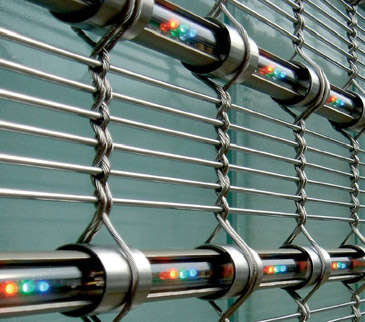
Mediamesh® is a stainless steel mesh fabric with interwoven LED profiles and with connected media controls installed behind it. The LEDs render the images onto the facade, providing the ability to display a wide spectrum of graphics, animated text and video.

Comments: (0)

KULER -explore, create and share color themes-

Category: art+creativity+design+findings+⚐ EN

the web-hosted application for generating color themes that can inspire any project. No matter what you’re creating, with Kuler you can experiment quickly with color variations and browse thousands of themes from the Kuler community…

Comments: (8)

[case study] wind power integrated into buildings

Category: architecture+engineering+findings+new technologies+⚐ EN

one of the few built examples of wind power integrated into buidings is Near North Apartments in Chicago, where eight HAWT’s [HAWT Horizontal Axis Wind Turbine] on the structure´s roof produce about 10% of the building´s total energy needs…

Comments: (6)

Energy Ball [Wind turbine]

Category: design+findings+new technologies+research+sustainability+⚐ EN

The Energy Ball designed and built by Home Energy, breaks from most wind turbine design by using a spherical structure. They say that by using such a design, significantly higher aerodynamic efficiency can be achieved (40% better efficiency), as compared to traditional designs…

Comments: (0)

fisheye sessions #1

Category: city+findings+research+urbanism+⚐ EN

Hi! I’m going to start up a new thematic post series called “fisheye sessions” to show homemade views that can show other ways to interpret or analyze urban or suburban space.

In this case,  in relation to the work about Fuencarral axis that we are developing in the office, I shall show a fisheye view of the Gran Vía & Montera crossroads in Madrid.

Comments: (8)

city mine(d)

Category: city+findings+⚐ EN


City Mine(d) is a production house for urban interventions, committed to the development of new forms of urban citizenship, the re-appropriation of public space -roads, airwaves, stations, estates, parks, squares, virtual space- and the creation of cutting edge public artwork. The initially Belgian NGO now has agencies in Brussels, Barcelona and London, which are registered offices of the head office in Brussels.

Comments: (3)

burb.tv

Category: city+findings+urbanism+⚐ EN

burb.tv
BURB.TV is a collaborative research wiki focusing on the urbanization of China. Each article is a topical blog or BURB into which texts, images, and discussion are submitted. Each BURB grows to expand into the larger knowledge of The Chinese Dream, a project that investigates the goal to build 400 new cities by 2020. The research is produced with visionaries, architects, planners and social scientists invited by the Dynamic City Foundation.

Comments: (0)

Re:vision

Category: findings+new technologies+sustainability+⚐ EN


Re:Vision is a diverse group of people focused on changing the urban landscape by reimagining all the components that make up a city block. From energy to transportation to commerce to community, we believe that by finding innovative, healthy and sustainable ideas to help revitalize one urban block, we can create a blueprint for better cities everywhere.

Interesting innitiative…They have also a tv channel.

Comments: (0)

CASCOLAND: things to do

Category: findings+⚐ EN


We present a team from Johannesburg: THE GREAT CASCOLAND..

In the summer of 2004 Cascoland was initiated at the Oerol-festival on the island of Terschelling, the Netherlands. Bringing together a group of five artists all researching Do It Yourself (DIY ) architecture from different backgrounds.

Comments: (0)

Do you know what a Makeador is?

Category: findings+sustainability+the environment

We can all be Makeadores. Anyone who can find valuable what others discarded is a Makeador. The alterego of the person that appears at the very moment he/she is about to make the action of reusing.

It comes and goes, it shows in temporary situations when we are looking for something. Makear comes from “make up”, mending, customising, personalising, repairing, tuning, adapting, sorting out… you make it pretty.

In today’s consumer society, brands are any word, name, symbol or object used for identifying and distinguishing articles by a particular producer from those made by competitors. They infer certain personality and image to the products, so that they become dependant on the brand.

Now MAKEA is born. An alternative to the “use & dispose” culture. MAKEA is a brand that doesn’t sell anything. It represents an attitude of resistance.
MAKEA is the collective intelligence and creativity that turns into useful again what the consumer society has rejected. The idea is to bring back the motto “do it yourself”, extending the useful life of products, going back to knowing how to make things, breaking with the “empty wasting commodity” that sells in boxes the consumer culture.

I bet you are curious to see what we are talking about… well, then, check out this website: makeatuvida.net

Comments: (0)

Data base for 20th Century Spanish Architecture

Category: architecture+findings+internet+research+⚐ EN

Newspaper ELPAIS published some weeks ago an article about the setting up of a vast data base of 20th Century buildings in Spain. You can access this catalogue from the website http://www.archxx-sudoe.es/, where you will find 5600 buildings in Spain, as well as Gibraltar and the South of France. This ambitious project sounds very interesting – it’s a shame the website doesn’t seem to work very well… (at least we have tried and weren’t successful). We will see how useful it can be, how much information it gives, etc. You can read more about it (in Spanish) from ELPAIS digital, where you can also see some pictures (beautiful lavadero de Betanzos, 1901)

Comments: (0)

symbollix

Category: city+findings+⚐ EN

Some people are very clever: Symbollix define themselves as “pioneers in innovative publicity techniques”. The idea is simple but effective: creating “anti-grafittis” by cleaning out certain parts of the dirty surfaces in the city. The result is eye-catching and, at the same time, a good way of staying clear of possible demands for vandalism.

Comments: (0)

studiochu

Category: design+findings+internet+⚐ EN

studiochu graffiti

Check out this website: www.studiochu.tv. On this site you will find the work of Julian Pablo Manzelli (aka “chu”), ranging from video clips to toyz, with plenty of interesting graphics. My favourite section is STREETart: graffities in different cities (Mexico FD, Berlin, Buenos Aires…), good examples of interventions in the city.

Comments: (0)

webcams of the world

Category: findings+internet+new technologies+⚐ EN

I have come accross this website, www.fisgonia.com, from which you can look for webcams installed around the world. It is specially interesting because the webcams are “geo-referenced” (we know this term thanks to Domenico), that is, they are located in a world map in googlemaps.
Another site for looking for webcams throughout the world is www.earthcam.com. The design of this site is less attractive but the search engine is pretty efficient.

Comments: (0)

Birgit Ramsauer

Category: findings

We had the pleasure to meet this very interesting German artist at the lecture [ecosistema urbano] gave in Cooper Union, NY, having been invited by David Graham. Brigit carries out “performances” in public spaces, promoting an alternative use. We want to point out some of her work: Performance (ART : HOME – LESS Project New York, Marseille, Moscow, Berlin), Walk the Wall y Moving Standpoint I.

www.birgitramsauer.net