Comments: (0)

IAAC THESIS PROJECTS 2009. Pablo Rica, Barcelona, Spain

Category: ⚐ EN+architecture+eu:abierto

IAAC_pablo_rica

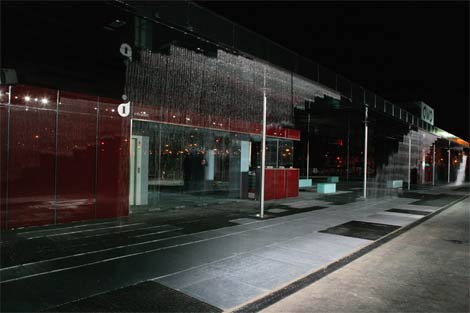
Today we present the work by Pablo Rica: Compact – Fabric Forming Component .
Fabric is a flexible and adaptable material with a soft appearance. In combination with a fill in material, the properties change from supple to hard, gaining structural and thermal qualities. The hardened material turns to have a soft appearance in reverse. This is where the ambiguity and discrepancy from solid fabric to elastic stone becomes interesting. And in that process of changing condition is where new possibilities of design arise. Compact is a research project about examining the potential of fabric as a construction technique and developing a modular system, in which material properties and environmental aspects are involved. continue reading
Comments: (0)

IAAC THESIS PROJECTS 2009. Brynhildur Guðlaugs from Reikiavik, Iceland

Category: ⚐ EN+architecture

sensual landscape01

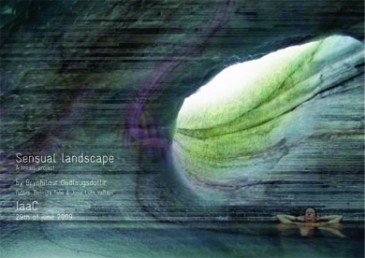
Today we present the work by Brynhildur Guðlaugs, an architect from Reikiavik, Iceland. Her proposal, called Sensual landscape, is a bathing facility for the hiking people who travel around the Torfajokull region in Iceland, an uninhabited area in the south and one of the most powerful thermal areas in the country, named after a glacier, Torfajokull. The structure of the facility is an adaptation of the already existing hot springs that are situated all around the area. continue reading

Comments: (0)

NEW YORK CITY LAUNCHES INTERNATIONAL DESIGN COMPETITION

Category: ⚐ EN+architecture

Competition to Tap Global Design Community to Develop Sidewalk Shed of the Future

Finalists to Receive $25,000 in Awards and Winner to See Design Built in Lower Manhattan

The New York City Department of Buildings (DOB) and the New York Chapter of the American Institute of Architects (AIANY) today announced the launch of the urbanSHED International Design Competition with support from the Alliance for Downtown New York, ABNY Foundation, Illuminating Engineering
Society New York City Section (IESNYC), and the New York Building Congress. continue reading

Comments: (0)

Entretiens de Chaillot – Lecture in Paris

Category: ⚐ EN+architecture+ecosistema urbano

cite_chaillot_portada
Next 21th of Septembre [ecosistema urbano] will give a lecture in Paris, at 19.00 in Le Palais de Chaillot.
For more information see below.

continue reading

Comments: (0)

[work in progress] A new municipality for Eilat

Category: ⚐ EN+architecture+work in progress

presentation_02
Last July we presented a proposal for the new municipality of Eilat (South of Israel), invited by the Israeli architect Peter Keinan. It was very interesting to develop an office building with an open space in extreme weather conditions as South of Israel. We give you all the details of this project. continue reading

Comments: (4)

IAAC THESIS PROJECTS 2009. Rodrigo Toledo from Medellín, Colombia.

Category: ⚐ EN+architecture+downloads

imagen_cabecera
Jose Luis Vallejo and Belinda Tato have been tutors of one of the thesis projects group at the IAAC last June. There were 16 different students from many different countries such as Russia, Poland, Colombia, Turkey, India and so on. It has been very interesting and exciting to work with architects with such different backgrounds. The topics were chosen by them and there is a whole range of different ones from a very small scale to a large one.
We will be presenting some of these thesis works in the following weeks. Today we present the work by Rodrigo Toledo, an architect from Medellín, Colombia. His proposal is for his home city Medellín and he deals with the economic and social issues related to public space scene. continue reading

Comments: (0)

[strategic issues] Empire State Building

Category: ⚐ EN+architecture

empirestate
A group of architects, engineers and constructors have started to think (and design) how to refurbish the Empire State into a modern and sustainable building. The initiative is led by a special person, Amory Lovins, co-founder of the “Rocky Mountain Institute” in 1982. continue reading

Comment: (1)

Towards a new architect: an interview with Carlo Ratti

Category: ⚐ EN+architecture

6a00d83452a98069e2011571e58de0970b-800wi

This post is totally from the “city of soundwritten by Dan Hill

I’ve just finished working with Carlo Ratti and various cohorts on a great little project, which I hope might see the light of day here before too long. In the meantime, I thought I’d post this discussion I had with Carlo late last year, which was recently published in Architectural Review Australia. We met at the Metropolis Congress in Sydney, where Signor Ratti had just given a presentation on his work at the MIT SENSEable City Lab, an outfit whose work I admire hugely, working as they do across many of my interests: interactive architecture, urban informatics, responsive envronments, multidisciplinary design and other implications of real-time networked pervasive information systems for the city. continue reading

Comments: (0)

Yes, we camp!

Category: ⚐ EN+architecture+creativity

palazzo del cgoverno terremoto
L’Aquila – Italy, earthquake

Yes, we camp! It’s the cry to denounce the crazy conduct of the after earthquake emergency.

For the first time in the recent history of earthquakes, after three months, people are still living under tents and they will have to stay there for a long time, according to the Government’s plans. continue reading

Comments: (0)

WHAT IF?…CITIES opening at Louisiana Museum of Modern Art

Category: ⚐ EN+architecture+ecosistema urbano

whatifcities_post-365x80
A few weeks ago we attended the opening of the exhibition “Green Architecture for the Future” at the Louisiana Museum of Modern Art, an institution which is working since the fifties in Humlebaek (a charming town half an hour by train from Copenhagen) . This museum was a pioneer in its time to set off in a rural setting and maintain its activity for over half a century. We recommend a visit (at least virtual) if you have the chance, because the landscape and its relationship with the architecture of the museum is probably something to remember. continue reading