Comments: (0)

International Dialogues: Architecture and Climate Change

Category: ⚐ EN+sustainability

Climate change is an urgent global challenge. In response to the Stern Report, the RIBA Trust launched “International Dialogues: Architecture and Climate Change|”, a major programme of symposia exploring climate change, ecology, architecture, design and urbanism. Inaugurated by Nobel Laureate Wangari Maathai, Founder of the Green Belt Movement, the series brings together visionary thinkers and practitioners from a range of disciplines to consider new possibilities, design innovation, technologies and partnerships in the global effort to mitigate and adapt to climate change.

Curated by Tamara Horbacka, RIBA Trust.

View videos of International Dialogues online:

http://www.architecture.com/WhatsOn/Talks/VideoArchive/VideoArchive.aspx

Comments: (0)

II European Conference – "Strategies for Development of the European Digital Space"

Category: ⚐ EN+espacios sensibles | sentient city


Our current everyday lives reflect a panorama of global, political, social and economic uncertainties and therefore raises the need to respond with imaginative initiatives that might help to develop new models in response to the economic downturn and the new paradigms and opportunities offered by the digital age. continue reading

Comments: (3)

madrid chair

Category: ⚐ EN+design+ecosistema urbano+madridshanghai

We would like to tell you a little bit about the multipurpose street furniture we designed for the Madrid pavillon at the Shanghai Expo 2010. Around the air-tree you can now find 200 chair elements in red, orange and violet color.
continue reading

Comments: (0)

Reclaiming the Street design competition

Category: ⚐ EN+architecture

As part of its ongoing multimedia exhibition project ‘Endless City’, MAMA is launching an open-submission competition: ‘Reclaiming the Street’. ‘Endless City’ is a multi-part project, initiated in the summer of 2009, in which MAMA explores the relationships between skateboard culture, the public realm and (visual) art, with a wink to the heritage of the Situationist International.

‘Reclaiming the Street’ is an open-submission competition aimed at established and emerging artists, architects and skateboarders who have or wish to establish a relationship with skateboard culture. We are looking for unpublished and unrealised concepts for the (re)organisation of urban public spaces in order to create a place for multiple user groups including skateboarders. Whereas in the past skateboarders were driven away from public spaces and then ‘caged up’ in purpose-built skateparks, we envisage a new phase in which youth culture and skateboard culture will be integrated within the public realm. In addition to our wish to provide a valid place for skateboard culture, we see skateboard culture as an instrument for improving the quality of certain public spaces.
‘Reclaiming the Street’ takes the idea of skateboard culture as ‘homo ludens’ as its starting point for building bridges between the all those who make use of the public realm. continue reading

Comment: (1)

SOLAR PARK SOUTH INTERNATIONAL COMPETITION

Category: ⚐ EN+architecture


Regione Calabria (Italy) – Town Planning and Territorial Governance Department – announces the first “Zero Emission” international competition, Solar Park South, fully managed online by means of the portal www.newitalianblood.com.
Participants are requested to provide economically, energetically and culturally sustainable projects and innovative ideas for the reuse of an imposing 10-km highway stretch, between the municipalities of Scilla and Bagnara, soon to be decommissioned.
Participation is open to architects, landscape architects, engineers, designers, artists, scientists, researchers and students worldwide. continue reading

Comments: (0)

WeCommune: Tech Support for Communes

Category: ⚐ EN+espacios sensibles | sentient city


Post-ownership living
may be closer than we think. We see the evidence all around us, in the form of innovations from community kitchens to emerging mobility solutions. So, if people are recognizing the practical potential in social solutions, why aren’t even more models for collaboration, sharing and product-service systems thriving? According to architect Stephanie Smith, spurring the movement may be a simple matter of providing the tech support.

This week Smith, who heads WeCommune, plans to launch the first software platform designed specifically for, well, communing (if you visit, you may get a splash page while they transition). The platform’s services will allow groups of three or more people to self-organize a “commune” defined by a shared interest or shared zip code, and will provide tools for communicating, organizing and managing projects, and sharing resources. continue reading

Comments: (0)

Cáceres: strategic planning for innovation and creativity

Category: ⚐ EN+urbanism

In the context of the extensive process to develop the Innovative and Creative Urban Strategic Plan (Plan Estratégico de Innovación y Creatividad Urbana), Cacéres City Council is calling INTA to help make its project a national and international reference.

The panel is intervening between the participatory and the design phases. INTA will involve its membership network in this challenging participatory process leading to an Innovative and Creative Urban Strategic Plan. INTA will expand on the proposals already made by several local working groups and comments received from external observers, providing a wider international input to the process.

Ecosistema Urbano, represented by Belinda Tato, will take part in this event. continue reading

Comments: (0)

#followarch studioUAP

Category: #follow+#followarch+⚐ EN+architecture

Twitter’s users have got into the habit of selecting and suggesting someone interesting to follow. This action has become a weekly international event and it is called #followfriday.

As you probably already know, [Ecosistema Urbano] has been inspired by the Twitter #followfriday to create a new section known as #followarch focused on recommending interesting and innovative architecture offices.

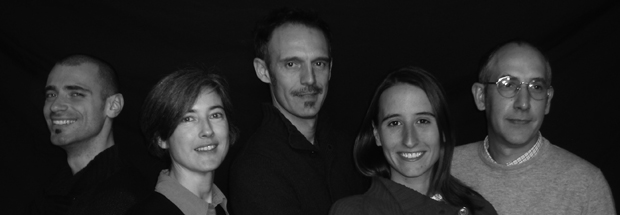
Today we are glad to present the work of the Italian firm based in Rome StudioUAP.

studioUAP, in Rome, founded by Silvia Cioli, Luca D’Eusebio and Andrea Mangoni, works mostly on public spaces and participation.

Urban projects, architecture and landscape design are the occasions for experimenting models for the introduction of social interaction especially with children and low tech architecture. studioUAP, works as an independent office, consultant or together with other architecture firms. Research field on Rome, through Microcities (1999), Romalab (2005) and the Bilancio Partecipato (2009) together with architecture competitions focused mainly on the design of public space (1st prizes Parco Radicelli and Paesaggi Mirati, 2008) has offered the opportunity to investigate themes applied to public works such as the kindergarten in Quarticciolo, the youth center in Corviale (innovation and urban quality prize EuroPA 2009) and the prototype design for a sustainable low cost kindergarten for Bracciano and other sites. continue reading

Comments: (0)

Interactivos?’10: Neighborhood Science Call for Projects and Papers

Category: ⚐ EN+events+technologies


Deadline: April 19, 2010
Dates of the event: June 7 – 23, 2010
With the participation of Platoniq, Douglas Repetto, and the working group formed by Andrés Burbano, Alejandro Araque, Alejandro Duque, and Alejandro Tamayo.
Interactivos?’10 is a workshop which develops projects gathering and putting into action collaboration and local urban knowledge networks using free software and hardware technologies and  “Do It Yourself” (DIY) and “Do It With Others”(DIWO) methods.

web:
http://medialab-prado.es

(fuente foto: www.youcoop.org)

Comments: (2)

Rome City Vision Architecture Competition

Category: ⚐ EN+architecture

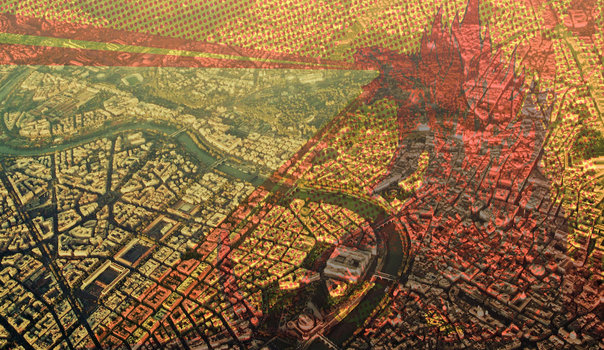
CITYVISION/ROME is a competition of ideas which challenges students, architects, engineers, designers and creative people to present their project proposals with the purpose of stimulating, joining and supporting the contemporary city, in this case Rome, through innovative ideas which can improve their connection between the historical and future fabric aimed to a correct evolution of the architectural historiography. continue reading