Comments: (3)

Plaza Ecópolis | Premio Mediterranean Sustainable Architecture 2013

Category: ⚐ ES+ecosistema urbano+noticias+sostenibilidad+urbanismo

Ecópolis201305blog grande

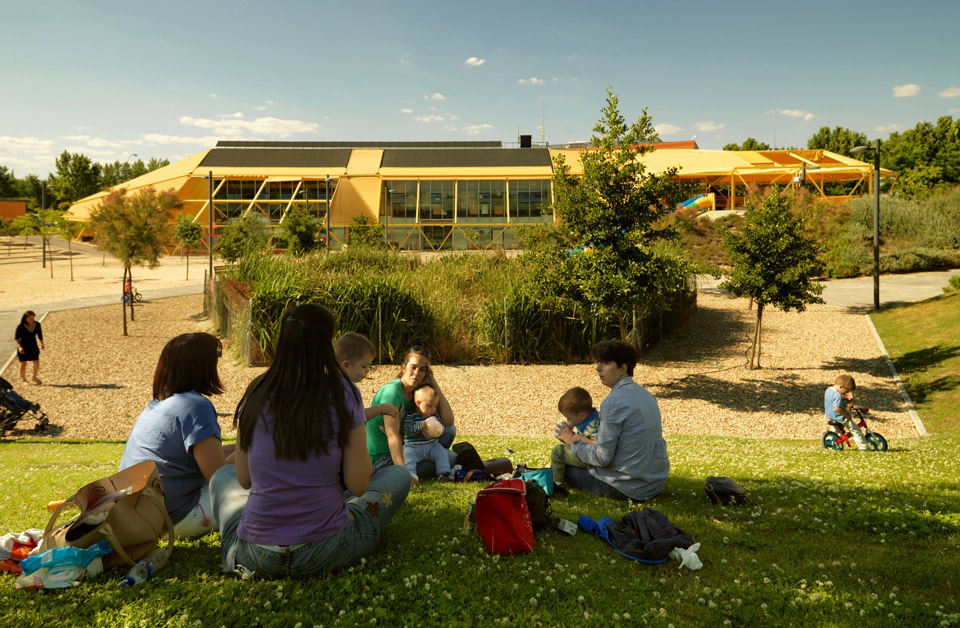
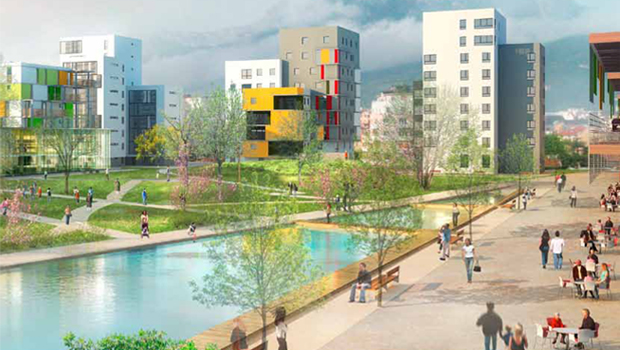
El premio Mediterranean Sustainable Architecture 2013 es un nuevo concurso internacional de dirigido a todos los edificios que se han completado en los últimos cinco años en la zona mediterránea.

El proyecto Plaza Ecópolis de Ecosistema Urbano ha recibido el segundo premio en la categoría CIVIC.

continue reading

Comments: (4)

La Universidad de Verano URBACT en… Dublin’s Fair City | Boletín URBACT Agosto 2013

Category: ⚐ ES+urbact+urbanismo

Boletín URBACT Agosto 2013

Hoy ponemos a la descarga el Boletín de Noticias URBACT del mes de agosto de 2013: [Download not found] continue reading

Comments: (3)

Desde el parque de Gezi a Rio de Janeiro | El urbanismo al frente

Category: ⚐ ES+arquitectura+ciudad+urbact+urbanismo

Los buenos servicios urbanos son más importantes que los eventos públicos

En la antigua Roma, las masas se mantenían calmadas gracias al pan gratis y el atroz espectáculo del Coliseo. Ahora son el Comité Olímpico Internacional (COI) y la Federación Internacional de Fútbol Asociación (FIFA) quienes juegan este papel.

Pollice Verso, Jean-Léon Gérôme, 1872 - clic para ver original

Pollice Verso, Jean-Léon Gérôme, 1872 – clic para ver original

Sin embargo, mientras Erdogan parece haber perdido toda popularidad con la decisión de arrasar el parque Gezi con otro centro comercial, los eventos en Brasil muestran que los servicios urbanos son en realidad más valorados que los espectáculos.

El urbanismo al frente

En ambos casos, la cuestión de la planificación urbana ha saltado al frente, quedando en primera línea de debate. Estambul es una de las ciudades de mayor crecimiento del mundo, con una población de más de 20 millones de habitantes. Sin embargo, tiene pocos espacios abiertos, e incluso éstos están en peligro por el modelo de desarrollo del sector privado. Las manifestaciones comenzaron a raíz de la propuesta para sustituir el parque Gezi por un centro comercial. continue reading

Comment: (1)

Equipamientos domésticos ecológicos, autoconstruibles y abiertos | Los Agrodomésticos

Category: #follow+#followarch+⚐ ES+diseño+urban social design+urbanismo

Para acabar la semana con algo fresco, interesante y entretenido, os presento los Agrodomésticos, una propuesta dentro del proyecto Agronautas de PEZestudio, que han presentado recientemente con el vídeo que dejo más abajo, y que posiblemente hayáis visto ya por las redes sociales.

¿Qué son los Agrodomésticos? Son equipamientos ecológicos domésticos, innovadores, autoconstruibles y de código libre. Los Agrodomésticos reducen el consumo de energía y recursos y pueden adaptarse a cualquier espacio habitable (vivienda, espacio público, etc). Funcionan como herramientas para generar nuevas prácticas asociadas, más resilientes y sostenibles.

En el vídeo podéis ver en uso el “horno solar parásito” y el “refrigerador botijo”:

Los Agrodomésticos son parte de una nueva fase del proyecto Agronautas llamada Nuevas Realidades Urbanas, que consiste en la generación de herramientas creativas que formalicen y transmitan al imaginario colectivo situaciones y prácticas verídicas en entornos urbanos, reformuladas en términos de sostenibilidad y procomún.

Si os pica la curiosidad sobre Agronautas, podéis explorar este documento:

También podéis seguir la conversación en Twitter (y en otras redes sociales):

#agrodomésticos + #agronautas por @pezestudio

¡Buen fin de semana!

Comments: (3)

Ciudades del Mañana: Acción Hoy | Propuestas y conclusiones de URBACT en 7 informes

Category: ⚐ ES+sostenibilidad+urbact+urbanismo

La serie de informes temáticos de URBACT “Ciudades del mañana: Acción hoy”, consiste en 7 publicaciones y es el resultado más importante del proceso de capitalización de URBACT II. Estos documentos permiten difundir el conocimiento generado desde la colaboración entre ciudades durante el desarrollo del programa, y están pensados como guías que incluyen reflexiones teóricas, estudio de casos y recursos prácticos que las ciudades europeas pueden aprovechar.

Ciudades del Mañana

Los 6 informes principales, resumidos en un séptimo documento resumen, tratan los siguientes temas: el desarrollo urbano integrado y sostenible, los retos y oportunidades de las ciudades en recesión, la relación entre empleo y ciudad, el apoyo a la juventud a través de la innovación social, la lucha contra las ciudades divididas, la creación de una nueva mentalidad sobre la movilidad y la eficiencia energética de los edificios en las ciudades europeas. continue reading

Comment: (1)

Planificación participativa para grupos de apoyo local | Entrevistas a los participantes

Category: ⚐ ES+urbact+urbanismo

Los pasados días 6 y 7 de junio asistimos a uno de los primeros seminarios de formación en planificación participativa que URBACT está poniendo en marcha para Grupos de Apoyo Local de sus proyectos. A la crónica del seminario que ya publicamos, añadimos hoy una serie de entrevistas que hicimos a los asistentes para recoger sus impresiones sobre este programa piloto de formación.

Ante todo, os dejamos una pequeña entrevista en vídeo a Victoria Gómez, una de las formadoras que junto a Tamara Guirao y los facilitadores Enric Fuster y Victor Pérez, llevaron el seminario adelante. Victoria nos cuenta en el vídeo su papel en el programa, su trabajo de formación y la relación con otras personas de la red.

Y a continuación transcribimos una selección de respuestas a un cuestionario que pasamos durante la actividad para conocer un poco más a los asistentes y que nos contaran sus impresiones:

continue reading

Comments: (0)

elCasc, activando Villena | Plazo de inscripción ampliado hasta el 28 de julio

Category: ⚐ ES+arquitectura+participación+urban social design+urbanismo

elcasc - cartel

elCasc, que sus organizadores definen como un “certamen de activación socio-cultural” es un evento que tendrá lugar en Villena del 29 de julio al 8 de agosto de 2013. Durante 10 días, el centro histórico de la ciudad acogerá una serie de actuaciones arquitectónicas, artísticas y sociales que servirán de campo de experimentación sobre posibles formas de reactivar este tipo de zonas desde diferentes disciplinas como la arquitectura, el diseño, el arte, el urbanismo, la rehabilitación, la sociología, la economía, la ingeniería o la comunicación audiovisual.

elCasc - talleres

Además de un seminario teórico, se desarrollarán una serie de talleres en los que se espera que participen 200 estudiantes y recién titulados de todas partes del mundo. Estos talleres abordarán temas como el acondicionamiento de un solar, el arte efímero en las calles, el tratamiento del espacio público, territorios habitables, actividades en espacios públicos olvidados, la recuperación de oficios, la mejora de la imagen urbana o la rehabilitación.

Muchos de los que coordinan los talleres os sonarán como personas o grupos muy activos en la búsqueda de nuevas maneras de trabajar con la ciudad: Pez estudio, Unusual Green y Urbanarbolismo, Arquitectura se mueve, PKMN [pac-man], Zuloark, Desayuno con viandantes…

elCasc

Nos alegra que más pueblos y ciudades estén animándose a organizar este tipo de eventos, y estamos deseando ver qué sale de éste. Si los políticos y los ciudadanos de Villena aprovechan y hacen suyo el gran empuje que va a recibir el “casc” durante estos días, puede ser el comienzo del camino hacia una nueva cultura urbana, una ciudadanía más activa y una ciudad mejor.

elCasc

Si aún no os habéis inscrito, podéis hacerlo hasta el 28 de julio.

Página oficial: www.elcasc.com

Comments: (0)

Alimentación sostenible en comunidades urbanas | Boletín URBACT Julio 2013

Category: ⚐ ES+urbact+urbanismo

urbact_654

Hoy ponemos a la descarga el Boletín de Noticias URBACT del mes de julio de 2013: [Download not found] continue reading

Comments: (0)

Linz harbour: a city and a river | Identity City Lab workshop with Schwemmland

Category: ⚐ EN+events+talleres+urbanismo

Linz and the harbour area of the intervention - Google Maps

Three weeks ago (Juny 5th-8th ) we were in Linz, Austria, invited by Roland Krebs for a lecture and a workshop, part of an event called Identity City Lab, which is part of the Creative Region program.

The workshop, lead by local collective Schwemmland and Ecosistema Urbano, was aiming to provide some fresh insights and proposals about the eastern harbour area of Linz, a big extension of former ‘schwemmland’ (alluvial land) turned into an industrial area during the second part of the past century.

Some context

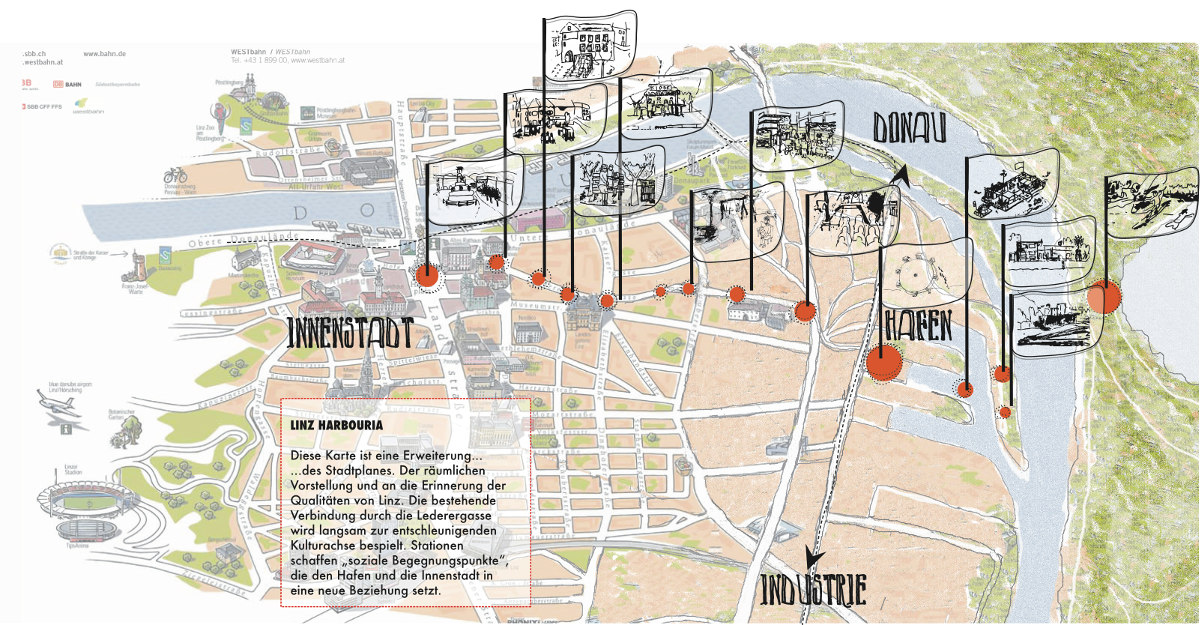
The area highlighted in the first image has been slowly fading out of the citizens’ imagination and become a ‘forgotten’ part of the identity of Linz. Tourist maps end right before the border of that area, which is still one of the most important connections of the city with the Danube and with its own history.

Tourist city map - Click to View PDF

Tourist city map – Click to View PDF

Nowadays, the area hosts an active industry and a working logistic transportation system by rail. Interestingly enough, it contains patches of different uses scattered between the industrial facilities: nature (even protected species live there); cultural or recreational zones like an airfield; private gardening and traces of former agriculture; restaurants and small street stalls that sell food to workers and passersby.

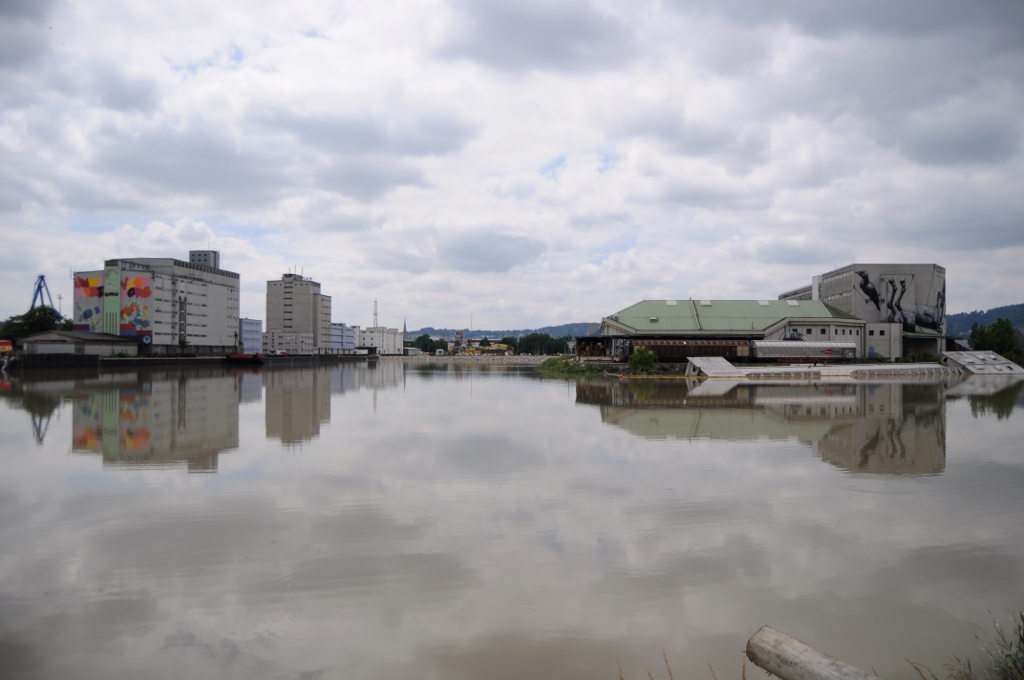
Despite the long decades of industrial activity, the 8 meter deep water in the north-eastern docks is usually calm like a mirror and crystal clear… although during our stay it was very muddy due to the flooding that had happened just a couple of days before.
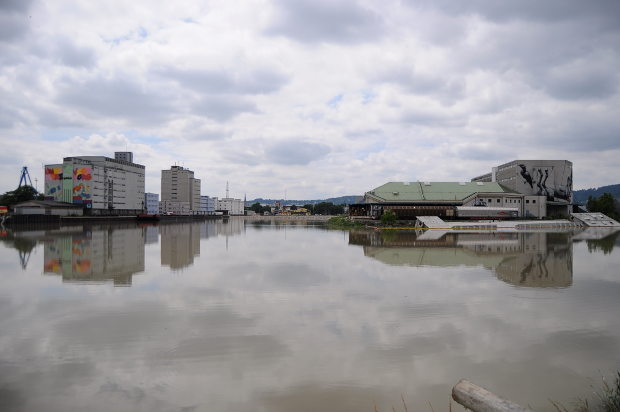
A basin between the docks - deep, calm water forgotten by the city

A basin between the docks – deep, calm water forgotten by the city

Some of the docks were recently filled in order to continue the industrial development of the area, which raised some concerns but can also be seen as an opportunity for the city of Linz to re-think its relation with the harbour and the water.

Here comes urban development: filling at one of the docks

Here comes urban development: filling at one of the docks

Activities

The workshop started with a guided tour by bike around the area, which gave everyone a clearer insight on its different aspects and the opportunity to meet interesting people living and working there. Then we had a first work session at Schwemmland’s office.
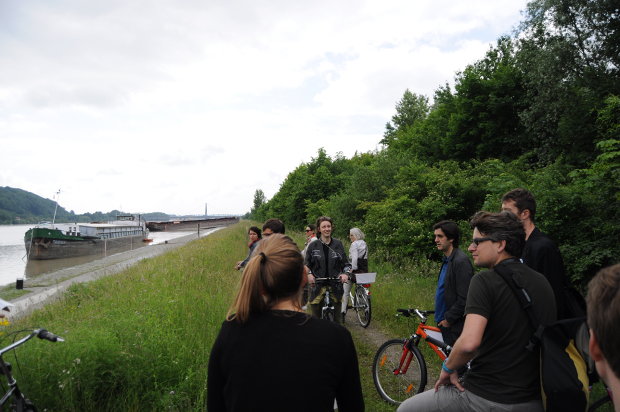
Bike ride by the river

Bike ride by the river

This aerodrome runway is not somewhere in the countryside  - it's right at the harbour

This aerodrome runway is not somewhere in the countryside – it’s right at the harbour!
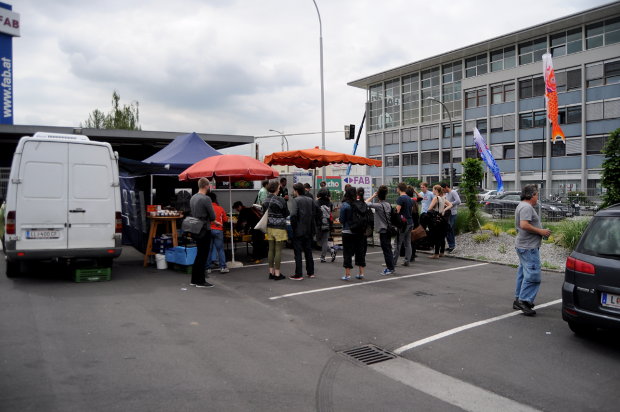
Traditional food stall between the office buildings

Traditional food stall between the office buildings

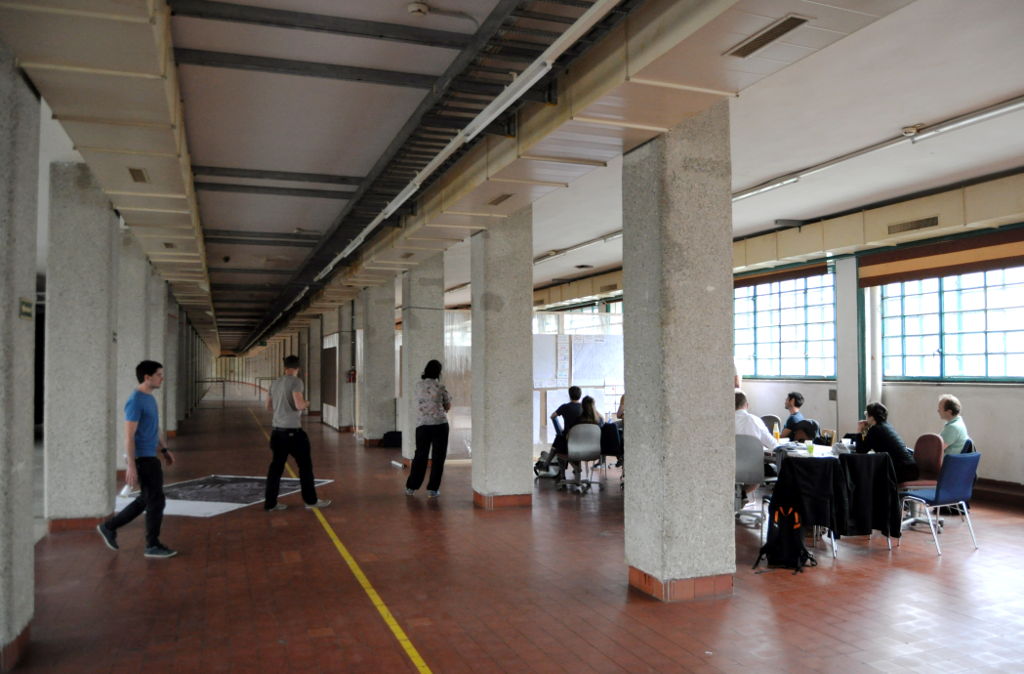
The rest of the workshop took place at the Tabakfrabrik, a ‘great’ (both ‘good’ and ‘big’) example of industrial architecture by Peter Behrens and Alexander Popp finished in 1935, which is now being transformed in a cultural center. Some light and temporary structures built of wood, textile and truss systems created a human-scaled space for everyone to work comfortably in the long hall of the second floor.

Working inside the Tabakfabrik, an amazing industrial building from the early XX century

Working inside the Tabakfabrik, an amazing industrial building of the early XX century

The participants, divided in small groups or couples, worked in quite different approaches, trying to imagine how the new industrial development that is planned for the area could be made compatible with some other uses or initiatives in order to bring that calm, clear water surface and its surroundings ‘closer’ to the city.

Outcomes

Despite the short time we had for developing them, there were some interesting proposals, so we ended up with a set of complementary ideas that will be presented to Linz AG, the company that manages almost every aspect of the city’s operation, maintenance and development.

An urban kitchen which could act as meeting point for the people working in logistics, industry, creative offices and artistic workshops and become a catalyst for activities, designs and actions on site.

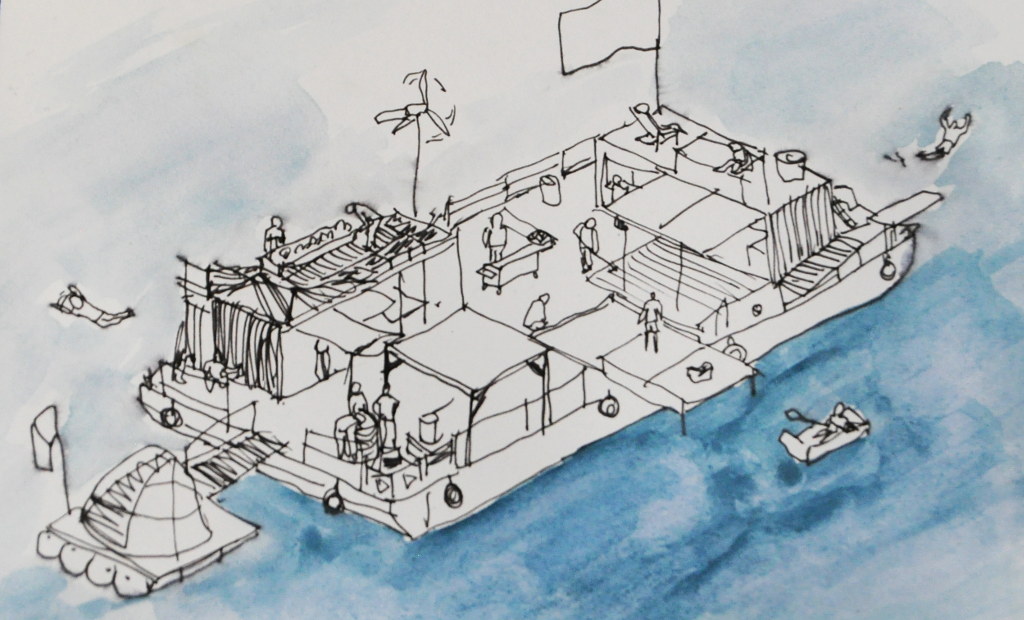
An extension of the typical tourist map of Linz, making emphasis on a west-east axis, departing from the main square and connecting cultural facilities and lively urban places in a chain that would lead to Harbouria, a citizen-driven ‘city’ floating in the harbour.
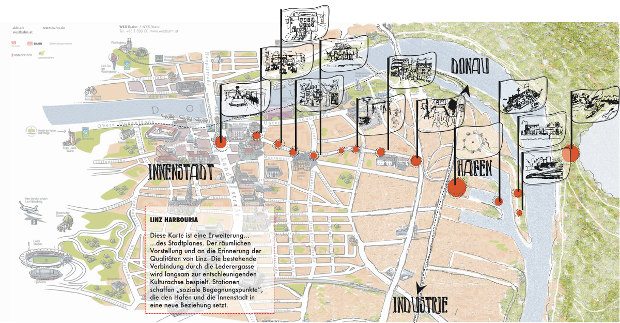
Extending the tourist map and creating a 'urban life chain' from the center to the harbour

Extending the tourist map and creating a ‘urban life chain’ from the center to the harbour

Harbouria - a floating 'cuty' in the docks

Harbouria – a floating ‘cuty’ in the docks

A very critical, almost poetical approach, which stated that the spontaneous activities in the harbour area should be preserved without a direct intervention. They talked about what could happen in the spaces “in between” the planned uses such as industry. Could we respect these emergences without trying to plan them?

Explaining how to keep spaces of opportunity without directly pointing at them

Explaining how to keep spaces of opportunity without directly pointing at them

One of the proposals was to always keep a public fringe always available and accesible right on the border between the ground and the water. Simple to explain, but with very significative potential results.

And another one approached the place from the point of view of nature: letting the ecosystem take part of the docks back and creating a quiet and slow natural cycle inside the human hectic cycle of production.

We hope that the city will take these suggestions seriously and develop them further. The harbour is an amazing space where the city and the Danube really meet each other, and it shouldn’t be neglected as a potentially valuable public space.

Post in German by Roland Krebs, organizer of the Identity City Lab
Post in German at CreativeRegion website, with more photos
Post about the conference at CreativeRegion website
TREIB GUT magazine, publication about the workshop and our thoughts about the place

Comment: (1)

Formación para grupos de apoyo local + Informes temáticos | Boletín URBACT junio 2013

Category: ⚐ ES+urbact+urbanismo

Formación para grupos de apoyo local + Informes temáticos | Boletín URBACT junio 2013

Hoy ponemos a la descarga el Boletín de Noticias URBACT del mes de junio de 2013: [Download not found] continue reading